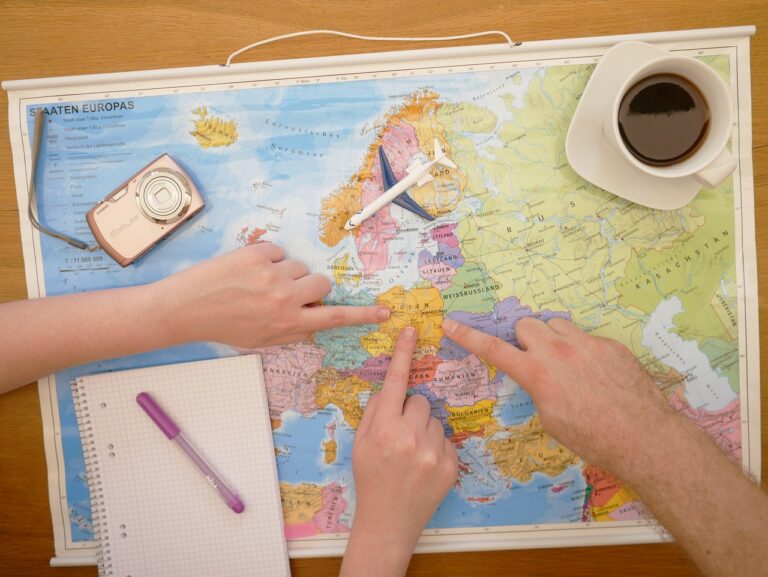
The most common mistakes Americans make when traveling to Europe are overstuffed itineraries, shaky entry-rule knowledge, and using money, transit, and tipping habits that only work at home. All of them are easy to fix with a little planning. Here are 20 of them, each with a practical way around it.

At a Glance
- Best time to go: May to June and September to early October for milder weather and thinner crowds than July and August.
- Getting around: Trains for city-to-city hops, budget airlines for long distances, and rental cars only for countryside regions.
- Where to stay: Small hotels or apartments within walking distance of a train station or a central transit line.
- Rough budget: Many travelers land around $120–$200 per person per day on a lean plan, $250–$400 at mid-range, and well above that for upscale trips, excluding flights. Prices vary widely by city and season.
Key Takeaways
- Do fewer places, and stay longer in each.
- Check passport validity, Schengen days, and ETIAS status on official sites before you book.
- Pay in local currency, carry a no-foreign-fee card, and keep a little cash.
- Reserve the headline attractions and the long train legs ahead of time.
- Pack light: you will carry your own bag up stairs.
Planning Mistakes: Overpacked Itineraries and Booking Too Late
1. Trying to see eight countries in ten days
This is the classic first time Europe travel mistake. Every border hop costs you a half day to packing, transit, and check-in, and you come home remembering train platforms. My rule is one base per three or four nights.
If you are unsure how long to allow, see our guide to how many days you need in Europe.
2. Booking flights and key tickets too late
Summer flights, popular hotels, and timed-entry attractions fill up months ahead. Book flights and lodging first, then reserve high-demand sights as soon as slots open. Waiting rarely gets you a deal and often gets you a worse room in a worse location.
3. Ignoring seasons and local holidays
August can mean shuttered family restaurants in parts of France and Italy as locals vacation too. Winter brings short days but also magic, especially in cities with Christmas markets. Match your dates to your goals using our month-by-month guide to the best time to visit Europe.
Entry and Paperwork Mistakes: Passports, Schengen Days and ETIAS
4. Assuming your passport is fine
Many European countries expect your passport to be valid for at least three months beyond your planned departure, and some airlines enforce stricter rules. Check the rules for every country on your route at the U.S. State Department’s international travel pages. Also look at the passport’s condition, since a damaged cover can cause problems.
5. Misunderstanding Schengen days and ETIAS
Americans can generally visit the Schengen Area for up to 90 days in any 180-day period, and the clock runs across all member countries combined. The UK and Ireland are not in the zone, so they have their own rules. A new pre-travel authorization called ETIAS has been planned for visa-exempt travelers, and entry systems are evolving, so confirm the current status on the official EU ETIAS website before you fly.
Longer stays need careful counting. Our Schengen 90/180 rule explainer walks through it.
Money Mistakes: Card Fees, Currency Conversion and ATMs
6. Using a card with foreign transaction fees
A fee of around 3% on every purchase adds up fast over a two-week trip. Bring a card that charges no foreign transaction fee, plus a backup from a different network in case one is declined.
7. Saying yes to dynamic currency conversion
When a terminal asks whether you want to pay in dollars or euros, choose the local currency every time. The dollar option is a convenience for you and a markup for them. The same goes for ATMs that offer to “guarantee” an exchange rate.
8. Relying on airport exchange counters and street ATMs
Standalone ATMs in tourist zones, often branded Euronet, tend to carry poor rates and high fees. Withdraw from a bank-branded machine, take out larger amounts less often, and skip exchange kiosks. Our guide to cards, cash, and ATMs in Europe covers the details.
Transportation Mistakes: Trains, Budget Airlines and Rental Cars
9. Buying a rail pass without doing the math
Passes are great for some routes and a waste on others. Compare the pass price with point-to-point tickets for your actual route on an operator site such as Eurail or the national railway. High-speed trains in Spain, Italy, and France often require seat reservations on top of a pass.
10. Treating budget airlines like US carriers
The ticket price is the beginning. Carry-on size, bag fees, seat selection, and airport check-in charges can double the cost if you are careless. Measure your bag against the airline’s rules, check in online, and read our guide to budget airlines in Europe before booking.
11. Renting a car for city-hopping
Driving between Florence, Rome, and Venice means paying for parking you cannot find and risking fines in restricted traffic zones. Cars make sense for Tuscany, the Scottish Highlands, or Provence. Also remember that manual transmissions are standard, and some countries expect an International Driving Permit, so check before you reserve.

Etiquette Mistakes: Tipping, Dining Habits and Greetings
12. Tipping 20% out of habit
In much of Europe a service charge is built in, and locals round up or leave a few coins for good service. Overtipping is not offensive, but it is unnecessary. Customs differ by country, so check the country-by-country tipping guide.
13. Expecting fast table turnover
Dinner is an evening, not a transaction. Waiters will not bring the check until you ask, because rushing you is considered rude. Flag them down and say you are ready to pay.
14. Skipping the greeting
Walk into a French bakery without saying “Bonjour” and you will notice the chill. A simple hello, please, and thank you in the local language goes a long way. Start in the local language, then ask politely whether they speak English.
Safety and Health Mistakes: Pickpockets, Scams and Travel Insurance
15. Letting your guard down in crowded hot spots
Pickpocketing clusters around metro lines, major landmarks, and packed trams in cities like Paris, Barcelona, and Rome. Use a zipped crossbody bag worn in front, and keep your phone out of back pockets. Never hang a bag on a chair at an outdoor café.
16. Falling for common tourist scams
- Friendship bracelets: Someone ties one on your wrist, then demands payment.
- Petition clipboards: A distraction while a partner reaches for your pockets.
- Unmarked taxis: Use official ranks or a ride-hailing app instead.
- “Free” gifts or photos: Politely decline and keep walking.
17. Skipping travel insurance
US health insurance often provides limited coverage abroad, and Medicare generally does not cover care outside the US. A policy that includes medical coverage and evacuation is a modest cost compared with one hospital bill or a canceled prepaid trip. Enroll in the State Department’s Smart Traveler Enrollment Program for free alerts.
Packing and Tech Mistakes: Adapters, Phone Plans and Heavy Luggage
18. Frying a hair tool or forgetting the adapter
Europe runs on higher voltage than the US. Check that devices say “100–240V” before plugging them in, and bring the right plug type. Our Europe plug adapter guide explains which ones you need.
19. Paying carrier roaming fees
Daily international passes add up quickly. An eSIM or a local data plan is usually cheaper, and you can install an eSIM before you leave home. Download offline maps as a backup, and use Wi-Fi calling for messages home.
20. Hauling a huge suitcase
Cobblestones, narrow staircases, and tiny elevators punish big bags. Pack for a week regardless of trip length and plan to do laundry once. If you can lift your bag overhead on a train, you packed correctly.
Sightseeing Mistakes: Skipping Reservations and Ignoring Opening Hours
These are the easiest Europe travel mistakes to avoid, and the ones that cost the most time.
Showing up without timed tickets
Big attractions, such as the Louvre in Paris, the Sagrada Família in Barcelona, and Milan’s Last Supper, sell limited slots and can sell out. Book directly through the official site, for example the Louvre’s official site, and be wary of resellers charging a markup.

Assuming everything is open
Many museums close one day a week, often Monday or Tuesday. Shops in Germany and Austria close on Sundays, and small-town businesses in Spain and Italy may shut in the afternoon. Always check official opening hours for the specific dates you will be there, since these change with season and holidays.
How to Avoid These Mistakes Americans Make When Traveling to Europe: A Quick Pre-Trip Checklist
Use this timeline as a simple framework for any Europe trip planning effort. For a longer version, see our Europe travel checklist.
| When | What to do |
|---|---|
| 3–6 months out | Check passport validity, confirm entry rules and ETIAS status, book flights and lodging. |
| 1–3 months out | Reserve major attractions and long train legs, buy travel insurance, order a no-fee card. |
| 2–4 weeks out | Set up an eSIM, buy adapters, notify your bank, and download offline maps. |
| Final week | Weigh your bag, save confirmations offline, and confirm opening days. |
Plan Smarter, Travel Better
Most American tourist mistakes in Europe are not about culture clashes. They come from trying to do too much, too fast, with too little booked. Pick a slower route, verify the rules on official sites, and leave room for a long lunch. Start sketching your route today, then book your first two big pieces, flights and a central place to stay, this week.
Frequently Asked Questions
What is the biggest mistake Americans make when traveling to Europe?
The most common mistake is overpacking an itinerary: trying to see too many countries in too few days. Constant transfers eat time and money, and you end up seeing stations rather than cities. Choose two or three bases, allow slow mornings, and leave buffer time for delays.
Do Americans need a visa or ETIAS to travel to Europe?
US citizens currently don’t need a visa for short Schengen stays of up to 90 days in any 180-day period. ETIAS, a pre-travel authorization, is planned to be required once it launches, so check the official EU site before booking. Also make sure your passport is valid at least three months after you leave.
Should Americans pay in dollars or local currency in Europe?
Use a no-foreign-transaction-fee card for most purchases and always choose to pay in local currency when asked, not dollars. Dynamic currency conversion adds hidden markups. Carry a small amount of euros for markets, public toilets and small cafés, withdrawing from bank-affiliated ATMs.
Is tipping expected in Europe like it is in the US?
Tipping is not obligatory like in the US. Service is often included, and rounding up or leaving a few euros for good table service is enough, usually 5-10 percent. Check your bill for ‘service compris’ or ‘servizio’ before adding anything extra, and never feel pressured to tip 20 percent.
Featured image: Photo: beasternchen, Pixabay