
I’ve been to Portugal four times now and I still haven’t seen the Azores. That’s not a humblebrag, it’s a warning. The country looks tiny on a map, people book eight days thinking they’ll “do” it, and then they spend half the trip in a rental car being annoyed.
Here’s the thing nobody tells you: Portugal isn’t one destination. It’s about four, and they don’t have much to do with each other. There’s Lisbon and its orbit. There’s the north, which is granite and rain and wine. There’s the Algarve, which is a beach holiday. And there are two island groups out in the Atlantic that feel like they belong to a different country entirely.
So below are the fifteen places worth your time, with some honesty about which ones are overrated. Then the boring but useful part at the end: seasons, costs, how to get around, and how many days you actually need.
Key Takeaways: Best Places to Visit in Portugal
- Lisbon and Porto are the two anchors, three hours apart by train, and most first trips should include both.
- Sintra and Cascais are day trips from Lisbon. You don’t need a car for either.
- After that you pick a lane: Algarve for beaches, Douro for wine, Madeira or the Azores for landscape. Trying to do two of the three in a week is how holidays get ruined.
- Seven to ten days covers Lisbon, Sintra, Porto and the Douro comfortably.
- April–May and September–October beat summer on almost every measure except sea temperature.
- Roughly €60–90 a day if you’re travelling lean, €100–165 mid-range, flights not included.
15 Best Places to Visit in Portugal
Lisbon: One of the Best Places to Visit in Portugal
Lisbon is built on seven hills and you will feel every one of them in your calves by day two. Wear real shoes. The cobbles here, calçada portuguesa, are beautiful and they are lethal in the rain.

What I love about the city is how vertical it is. You turn a corner expecting more street and instead there’s a gap in the buildings and the whole Tagus is sitting there, wide as a lake, with a red bridge across it. The miradouros are the point of Lisbon. Santa Catarina, Graça, Senhora do Monte. Buy a beer from the kiosk, sit on a wall, watch the light go orange on the rooftops. That’s a better evening than most restaurants will give you.
Alfama is the old Moorish quarter that survived the 1755 earthquake, and it’s a genuine maze. Laundry strung between windows, fado leaking out of doorways after nine, cats everywhere. Get lost in it on purpose. Then head out to Belém for the monastery and the tower and the custard tarts at Pastéis de Belém, where the queue moves faster than it looks and the tarts come out of the oven hot enough to hurt.
Tram 28 is on every list including this one, but I’d be honest with you: in July it’s a 40-minute queue for a crowded ride past pickpockets. Go at 8am or walk the route instead. It’s the same view and it’s free.
Three days minimum. Four if you want to breathe.
Porto: A Must-See Place to Visit in Portugal
A lot of people arrive in Porto expecting Lisbon’s smaller cousin and leave having decided they liked it more. I’m one of them.
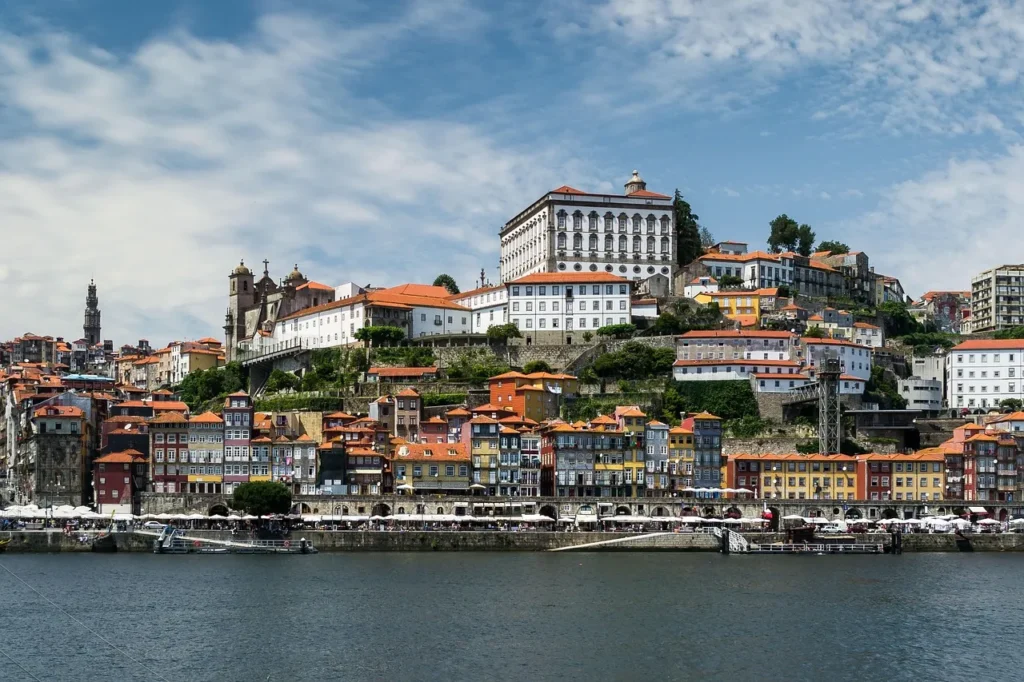
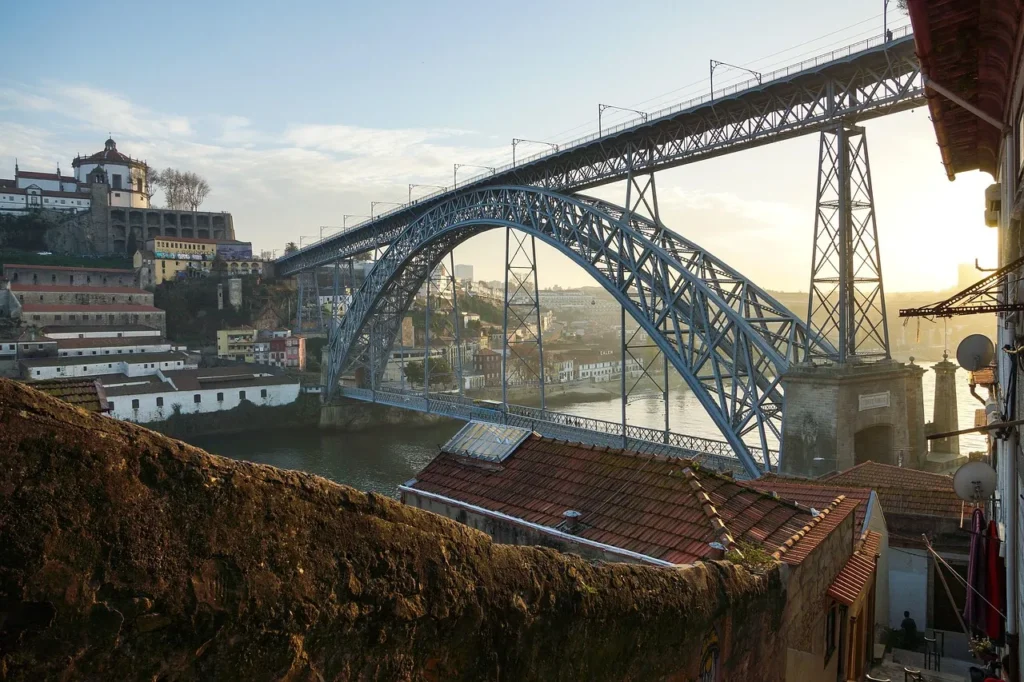
It’s darker and heavier, all granite and weathered tile, stacked up the hillside above the Douro in a way that shouldn’t structurally work. The Ribeira waterfront at sunset is the picture everyone takes. The better move is to walk across the top deck of the Dom Luís I bridge, which is free, terrifying if you don’t like heights, and gives you the best view in northern Portugal.
On the far bank, Vila Nova de Gaia, the port houses have been ageing wine in those cellars for three hundred years. Do a tasting. Ask them to explain tawny versus ruby and then actually listen, because it’s more interesting than it sounds.
São Bento station is worth ten minutes for the twenty thousand blue tiles in the entrance hall. Livraria Lello, the famous bookshop, is worth less than the internet claims: it’s gorgeous, and it’s also a paid ticket to shuffle shoulder-to-shoulder through one room. Go at opening or don’t bother.
Eat a francesinha once. It’s a sandwich of ham, sausage and steak, covered in melted cheese, drowned in beer sauce, usually with a fried egg on top and chips around the edge. It is not good for you and it is completely magnificent. You’ll want a nap afterwards.
Sintra: Best Place to Visit in Portugal for Castles and Palaces
Half an hour from Lisbon on a suburban train, into hills that hold their own weather. Sintra is often misty when the coast is clear, which is why the aristocracy built here and why it looks the way it does.
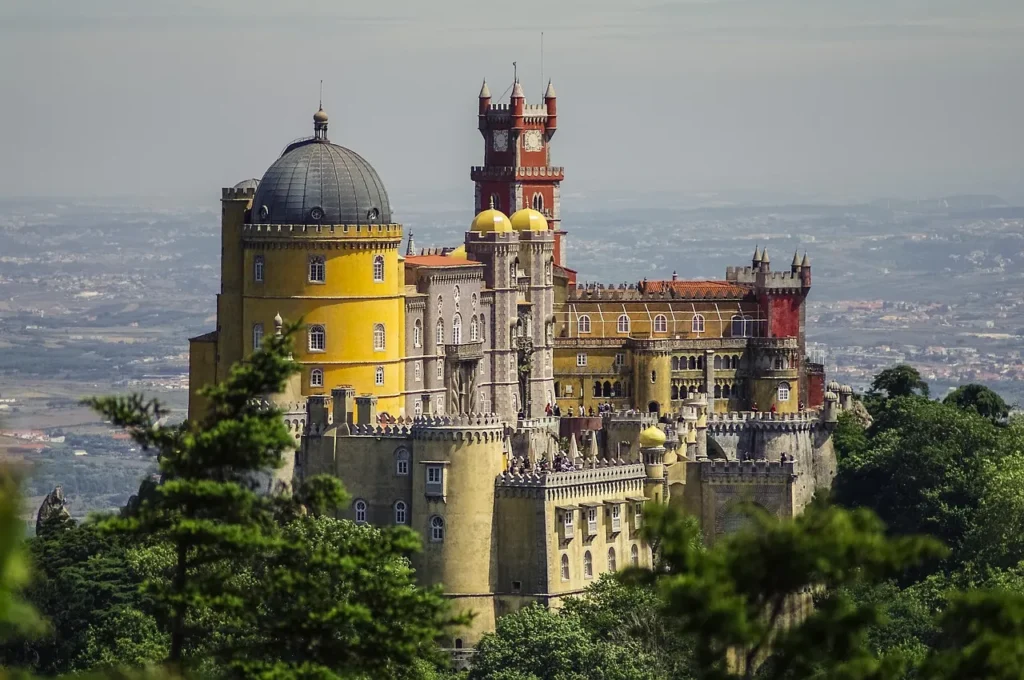
Pena Palace is the yellow-and-red fantasy castle on the ridge. Quinta da Regaleira is the one you’ll still be thinking about a year later, mostly because of the Initiation Well: a nine-storey spiral staircase going down into the earth, ending in tunnels that let you out somewhere else in the garden. The Moorish Castle walls are the cheap option and the best views.
Two pieces of advice, both learned the hard way. Book timed tickets online, days ahead, especially for Pena. And pick two sites, not four. Everything is uphill from everything else, the local buses crawl, and Sintra defeats people who try to speed-run it.
Piriquita bakery, travesseiro pastry, still warm. Non-negotiable.
Algarve: Best Place to Visit in Portugal for Beaches
The Algarve is three different coastlines that all get sold under one name, and knowing which one you want matters more than any hotel review.
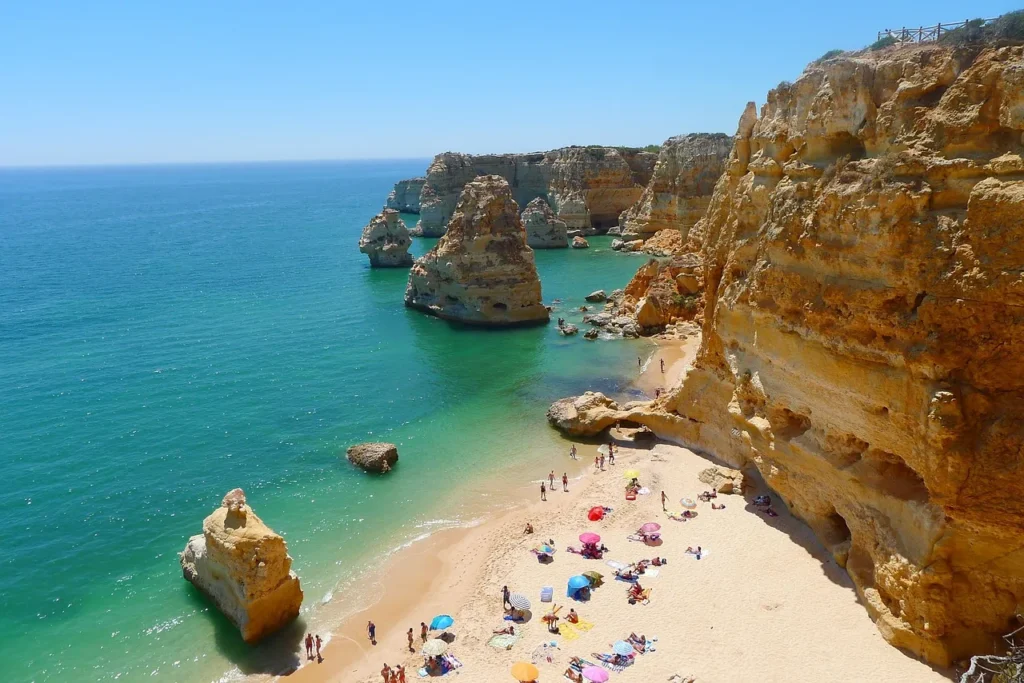
The central stretch between Lagos and Albufeira is the famous one: ochre cliffs, hidden coves, wooden staircases down to sand. It’s also where the resorts and the stag parties concentrate. Albufeira in August I’d genuinely avoid unless that’s your scene. The Benagil cave with its collapsed roof and circle of sky is spectacular and now so busy that swimming in is banned; take a kayak early or a boat.
Go east instead, to Tavira and the Ria Formosa, and it changes completely. Salt pans, flamingos, sandbar islands you reach by ferry, a town that still feels Portuguese in high season. Go west past Sagres and it turns wild: cliffs, wind, surf schools, very little development, the Atlantic doing its worst.
You want a car down here. The bus follows the main road and the good beaches are always down some unmarked turning.
Madeira: Best Place to Visit in Portugal for Nature
A volcanic peak in the middle of the ocean, 90 minutes’ flight from Lisbon, warm all year and almost aggressively vertical. There is barely a flat kilometre on the island.
The walking is the reason to come. Levadas are irrigation channels cut into the mountainsides centuries ago, and the maintenance paths beside them now make hundreds of kilometres of mostly-level trail through laurel forest and along some very serious drops. The Pico do Arieiro to Pico Ruivo ridge is the celebrity hike, above the cloud layer most mornings, with tunnels and stairs bolted to cliff faces. If you’re bad with exposure, this one will not be fun for you, and I say that as someone who spent a chunk of it looking at my feet.
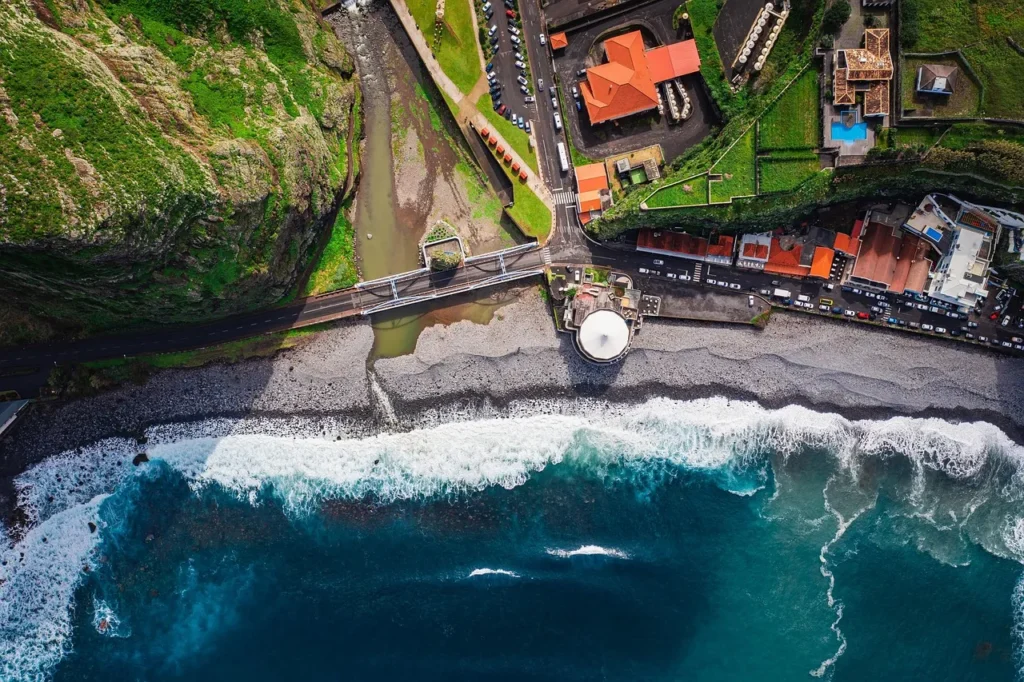
Funchal down at sea level is a proper little city with a market, a botanical garden and a cable car. And a caveat people never mention until they’ve booked: Madeira does not have sandy beaches. There are lava pools at Porto Moniz and a few pebbly coves. For actual sand you fly fifteen minutes to Porto Santo.
Drink poncha. Sugarcane spirit, honey, lemon. One is lovely and three is a decision.
Azores: Best Place to Visit in Portugal for Adventure
Nine islands, 1,500km out into the Atlantic, green in a way that reminds everyone of Ireland until a crater lake shows up.
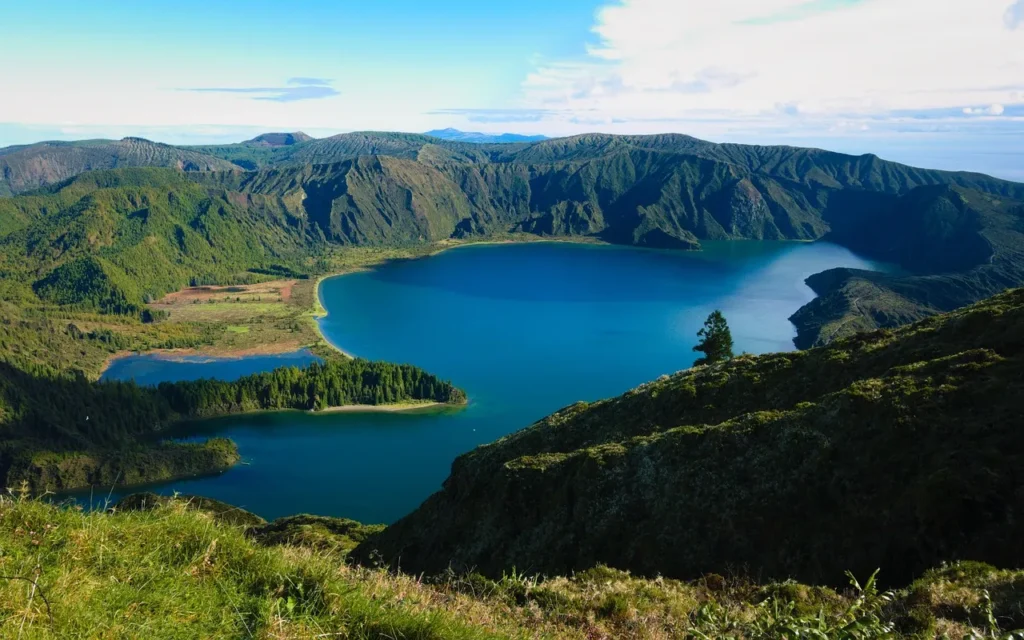
São Miguel is the entry point and probably the only one you’ll manage on a first visit. Sete Cidades is twin lakes sitting inside a volcanic crater, one blue and one green depending on the light and the story you prefer. Furnas is a valley of steaming vents where they still cook cozido by burying the pot in volcanic ground for six hours, and where you can sit in an orange thermal pool afterwards that will stain your swimsuit permanently. Bring one you don’t like.
Pico has Portugal’s highest mountain, 2,351m, and vineyards walled into black lava that UNESCO protects. Whale watching is world-class here, April to October for the migrating species, sperm whales year-round.
Whatever the forecast says, bring waterproofs. Atlantic weather does what it wants.
Douro Valley: Best Place to Visit in Portugal for Wine
Oldest demarcated wine region in the world, and it looks less like farmland than like something built. The terraces are cut into hillsides so steep that most of the work is still done by hand.
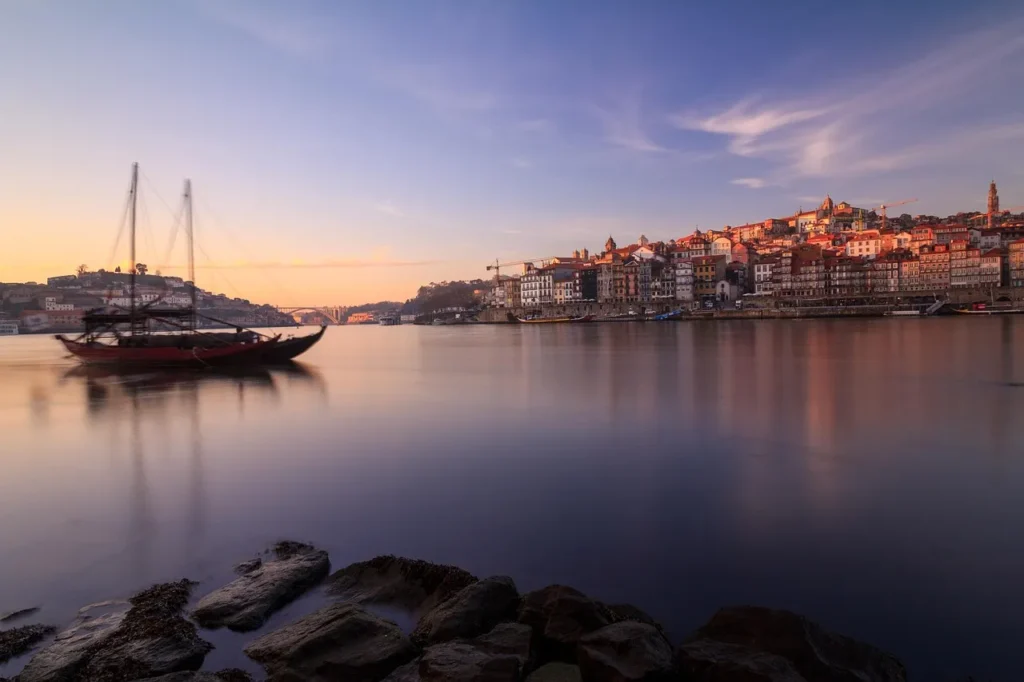
The single best thing you can do here costs about fifteen euros: take the train from Porto and sit on the right-hand side. The last stretch into Pinhão runs along the water and it’s one of the great railway rides in Europe.
Stay a night rather than day-tripping. Visit two quintas, not five, because the tastings are generous and the roads are switchbacks. September is harvest, when the valley is loud and busy and some estates still let visitors tread grapes, which is exactly as strange and fun as it sounds.
Coimbra: Best Place to Visit in Portugal for History
Portugal’s medieval capital, sat exactly halfway between Lisbon and Porto, and skipped by almost everyone rushing between them.
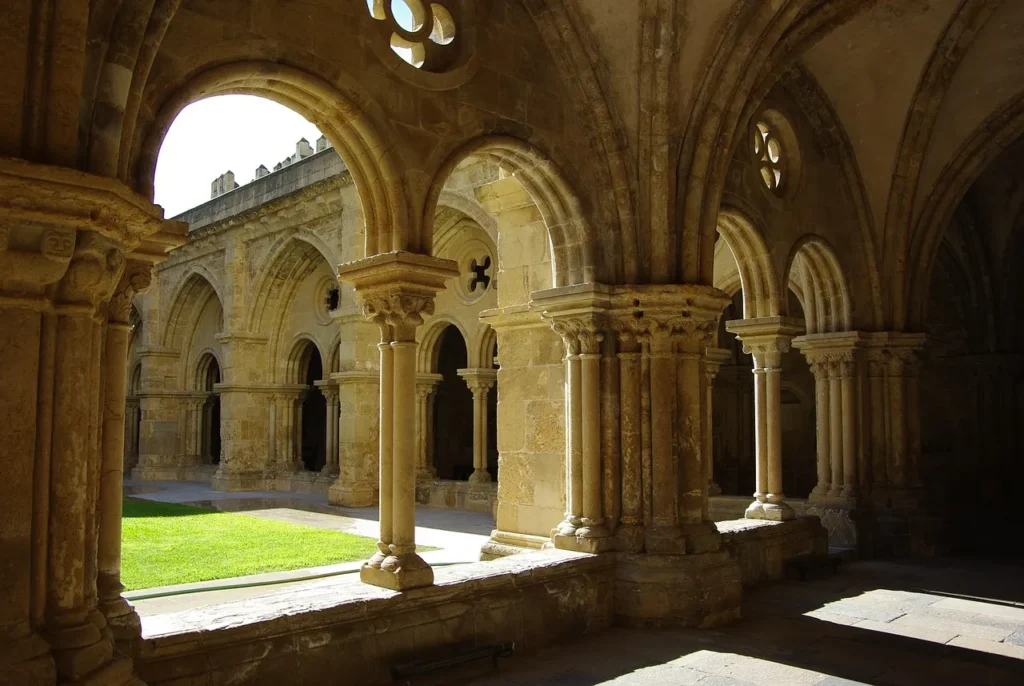
The university is one of the oldest in Europe and the Joanina Library is the reason to stop: gilded baroque shelves, painted ceilings, and a colony of bats that live behind the bookcases and come out at night to eat the insects that would otherwise eat the books. They cover the tables in leather every evening. It’s been running like this since the 1700s.
Coimbra has its own fado, sung only by men, in university capes, and it’s statelier than the Lisbon kind. Twenty minutes down the road, Conímbriga has the best Roman ruins in the country with mosaics still in the ground.
Half a day, or a night if you want the serenades.
Évora: A Historic Place to Visit in Portugal
Walled Alentejo town with a Roman temple standing in the middle of it, more or less intact, which is the sort of thing that would be a national monument anywhere else and here is just a thing in a square.

The Capela dos Ossos is what people remember. A chapel lined floor to ceiling with the bones of around five thousand monks, arranged deliberately, under an inscription telling you that the bones in here are waiting for yours. It’s not a gimmick. It was built to make you think about death, and it works.
Around the town is the Alentejo: wheat, cork oaks, whitewashed villages, and a wine region that’s currently doing the most interesting work in Portugal. There’s a stone circle west of town, Almendres, older than Stonehenge, standing in an olive grove with nobody guarding it.
Stay the night. The coaches leave at five and the town becomes yours.
Cascais: Best Coastal Place to Visit in Portugal
Forty minutes from Lisbon on a train that runs beside the sea the whole way. Old fishing town, now a comfortable resort with pastel buildings and good seafood, and small sandy bays right in the middle of it.
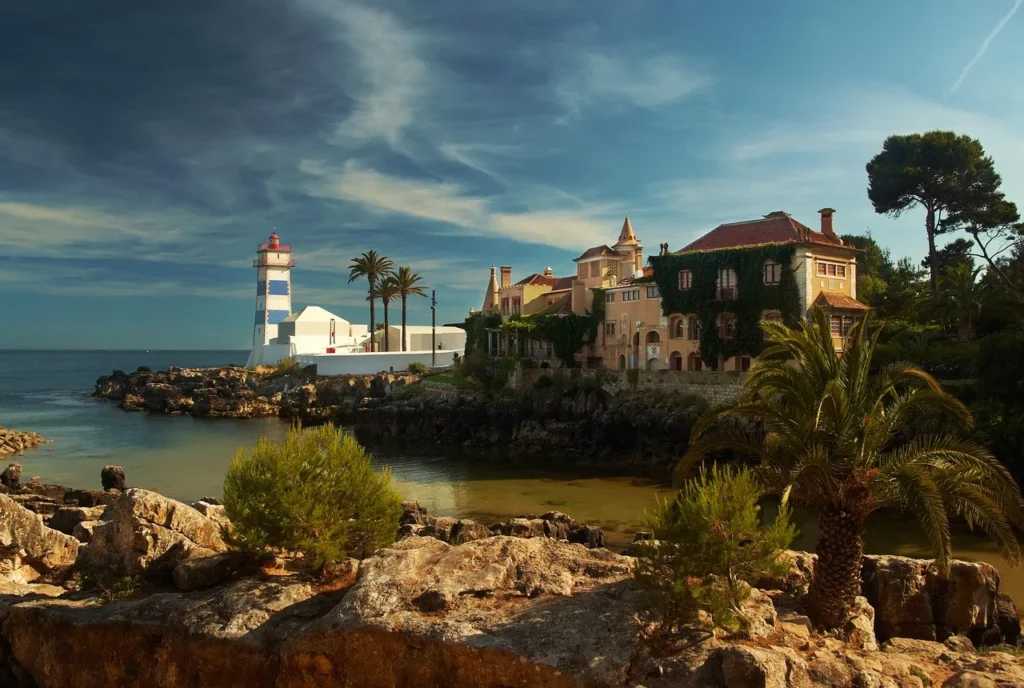
Walk or cycle west along the coast path past the Boca do Inferno blowhole toward Guincho, which is a wide, wild, wind-blasted beach that surfers love and sunbathers usually regret. There’s a dedicated bike path most of the way.
You can loop Cascais and Sintra by bus via Cabo da Roca, the westernmost point of mainland Europe, which is a cliff, a lighthouse and a lot of wind.
Óbidos: A Charming Place to Visit in Portugal
A whitewashed village entirely inside a medieval wall. Portuguese kings used to give it to their queens as a wedding present.
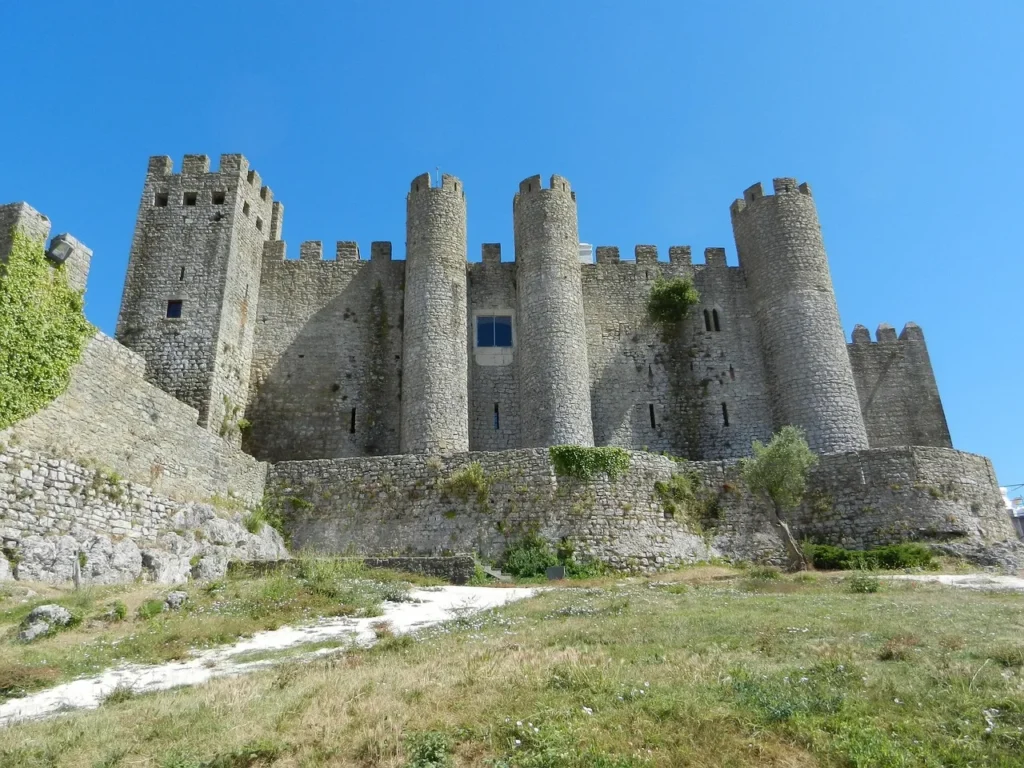
You can walk the full circuit of the ramparts. There are no handrails and a real drop, so mind your footing and don’t do it with small children. The main street is wall-to-wall souvenir shops, so turn off it immediately; the side lanes go quiet within twenty metres.
Drink ginjinha, sour cherry liqueur, from a small cup made of dark chocolate that you eat afterwards. Two euros, sold everywhere, genuinely delicious.
It’s an afternoon, not a destination, unless you come for the Christmas village in December or the medieval festival in July.
Braga: One of the Best Places to Visit in Northern Portugal
Portugal’s religious capital, and also a university town, which makes for an odd mix of baroque churches and packed student cafés.
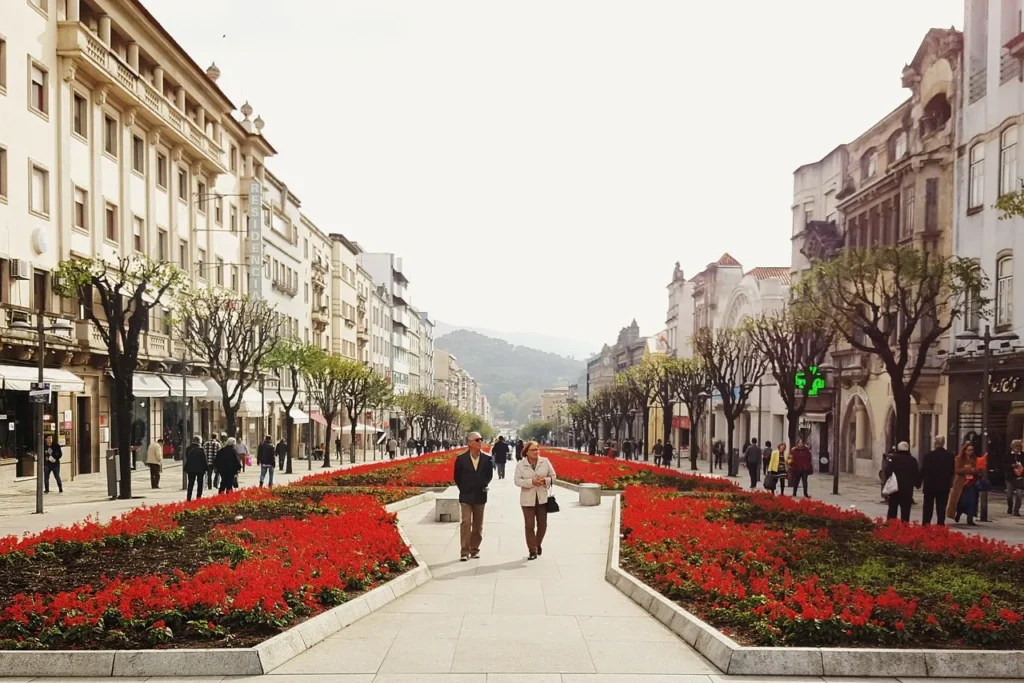
Bom Jesus do Monte is just outside the centre: a zigzag baroque staircase climbing the hillside past fountains and chapels to a church at the top. Climb it if your knees allow, or take the funicular, which is powered by water ballast, opened in 1882, and still the oldest of its kind running anywhere.
The cathedral in town is the oldest in the country. If your dates land in Holy Week, the processions here are among the biggest in Iberia.
Guimarães: A Historic Place to Visit in Portugal
There’s a wall in Guimarães that says Aqui nasceu Portugal. Portugal was born here. The first king was born in this town in the twelfth century and the place has been dining out on it ever since, fairly.
The castle is a blunt, serious fortress. The ducal palace next door is restored to within an inch of its life, heavy with tapestries and armour. But the old town is the real pleasure: granite arcades, wooden balconies, and squares that fill up in the evening with locals rather than tour groups. Largo da Oliveira after dark is one of my favourite spots in the country.
Cable car up to Penha if you want forest and a view over the Minho. Twenty-five minutes from Braga, so do the two together.
Nazaré: Best Place to Visit in Portugal for Giant Waves
There’s an underwater canyon here, up to five kilometres deep, aiming straight at the beach. It funnels Atlantic swell and concentrates it, and the result is the biggest surfable waves on the planet.
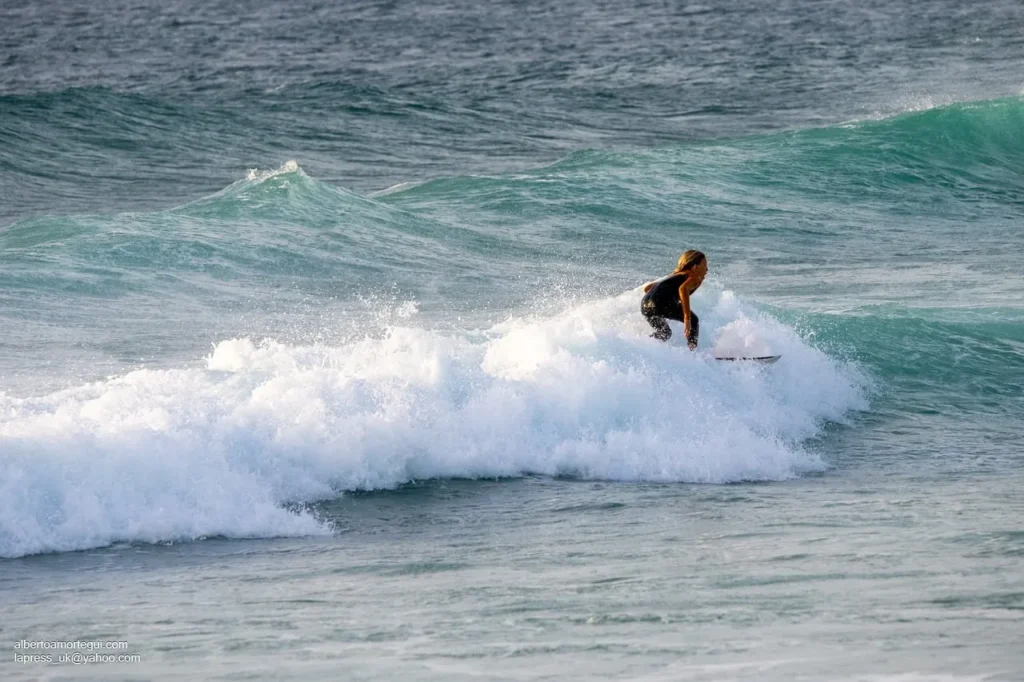
From October to March, surfers get towed into faces of twenty metres and more at Praia do Norte, and everyone else stands on the headland at Sítio, reached by funicular, watching through the spray. A record ride here in 2011 turned an ordinary fishing town into a global surf pilgrimage.
The rest of the year it goes back to being a broad, calm town beach with women selling dried fish in traditional layered skirts and some of the best seafood on the Silver Coast.
If the waves are the whole reason you’re going, watch the swell forecast, because the huge days are unpredictable and you can easily arrive to flat water.
Lagos: One of the Best Places to Visit in Portugal for Coastal Scenery
The best base in the western Algarve, and the most dramatic coastline in the country.
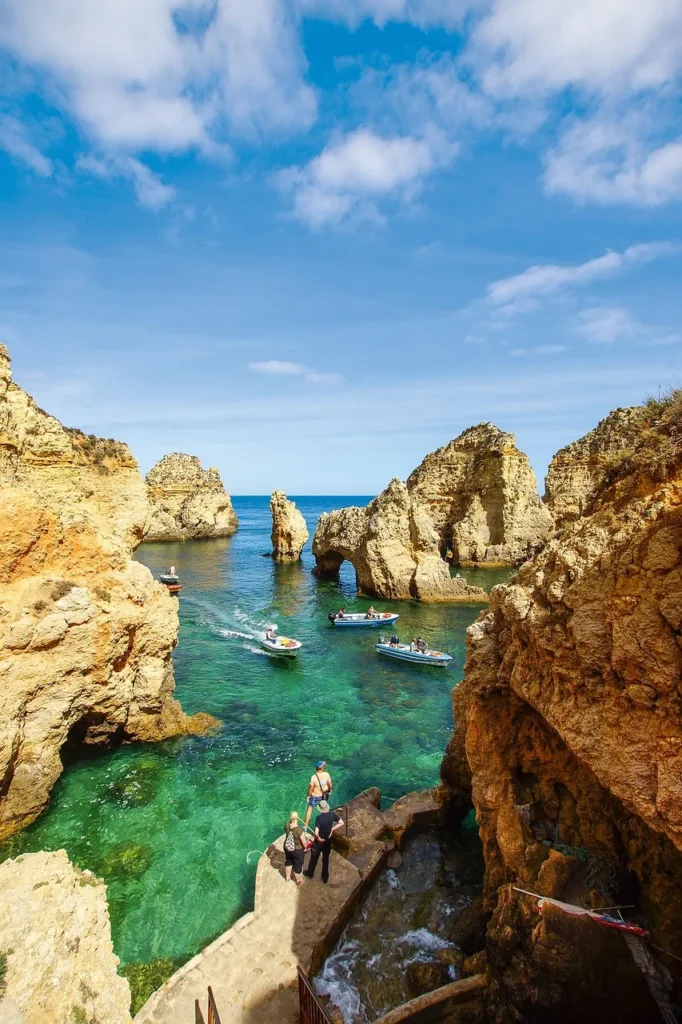
Ponta da Piedade, just south of town, is a cluster of golden sea stacks and arches and grottoes you can boat through. Go at sunrise before the tour boats, or take the clifftop steps down and see it from land. Praia Dona Ana and Praia do Camilo are the two beaches everyone photographs, both down long wooden staircases, both worth the legs.
The old town is walled and cobbled and pretty, and it also contains the site of the first slave market in Europe, now a small museum. It’s a quiet, uncomfortable half-hour and I think it’s worth doing. The Age of Discoveries that Belém celebrates has a second history, and this is where it starts.
Fair warning: Lagos is also the Algarve’s nightlife town. Check what street your hotel is on.
Best Places to Visit in Portugal by Travel Style
Best Places to Visit in Portugal for Beaches
The Algarve, obviously, with warm calm water from June into October. For fewer people go east to Tavira, for wilder water go west past Sagres. If you’re staying near Lisbon, Cascais and Guincho are twenty minutes apart and completely different beaches, and Ericeira up the coast is the surf town. Don’t pick Madeira or the Azores for a beach holiday. They’re not that.
Best Places to Visit in Portugal for Couples
Sintra for mist and palaces, the Douro for a wine-country stay in a converted quinta, Óbidos for one night inside the walls. Évora is the underrated one: dinner in a stone cellar in an empty medieval town beats most coastal resorts.
Best Places to Visit in Portugal for Families
Lisbon is more workable with kids than the hills suggest. The Oceanário is genuinely one of the best aquariums in Europe, the trams count as a ride, and Belém has grass. Cascais has small calm beaches and flat cycling. The central Algarve has the resorts built for this, with short transfers and shallow water. Óbidos and Guimarães are small enough to enjoy in two hours before anyone melts down.
Best Places to Visit in Portugal for History and Culture
Évora for Roman and medieval, Coimbra for the university, Guimarães for the founding of the country, Braga for baroque, Belém in Lisbon for the Discoveries. Porto, Guimarães and Braga make a tidy three-day northern loop.
Best Places to Visit in Portugal for Nature and Hiking
Madeira’s levadas and the Azores’ craters lead comfortably. On the mainland, Peneda-Gerês in the far north has waterfalls, granite valleys and wild ponies; the Rota Vicentina runs down the wild southwest coast as a multi-day walk; the Serra da Estrela has the highest mainland peaks and actual snow in winter.
Best Time to Visit the Best Places in Portugal
Best Places to Visit in Portugal in Spring
March to May might be the best all-round window. The Alentejo turns green and fills with wildflowers, the Douro comes back to life, and both cities are warm without the crowds. Madeira’s flower festival lands in spring. The sea is still cold, so plan coast walks rather than swimming.
Best Places to Visit in Portugal in Summer
Beach season, peak prices, peak crowds. Two things summer does that nothing else can: the Santos Populares street festivals in June, when Lisbon and Porto fill with grilled sardines and paper decorations and dancing until dawn (Porto’s São João on 23 June is the wild one, and yes, people hit each other with plastic hammers), and the Azores, which are most reliable from July to September. Inland Alentejo can pass 40°C, so treat Évora as a morning-and-evening town.
Best Places to Visit in Portugal in Autumn
My pick. The sea is at its warmest in September after a whole summer of heating, the Algarve empties, the Douro harvest is on, and Nazaré’s waves start showing up in October. Hotel prices in both cities drop from about the second week of September.
Best Places to Visit in Portugal in Winter
Mild rather than cold on the mainland. Lisbon sits around 15°C and it’s cheap. Madeira is the standout, one of the only places in Europe you can reliably walk in shorts in January. Nazaré delivers its monsters. Óbidos runs a Christmas village inside the walls. The north is wet and atmospheric and you’ll spend more time in cafés, which is not the worst outcome. Parts of the Algarve shut down.
How to Choose the Best Places to Visit in Portugal
Best Places to Visit in Portugal for First-Time Visitors
Lisbon three nights, Sintra as a day trip, Porto three nights, Douro one or two. That’s the route. It’s all doable by train, it gives you both cities plus the palaces and the wine country, and nobody has to drive. If you’ve got twelve days or more, add the Algarve or an island. Not both.
Best Places to Visit in Portugal on a Budget
Portugal is still good value by Western European standards, but the bargain years are over and Lisbon prices have climbed hard. Base yourself in the north, where Porto, Coimbra, Braga and Guimarães all cost meaningfully less. Eat the prato do dia at lunch, which is often three courses and a glass of wine for about ten euros, and eat lightly in the evening. Take Rede Expressos coaches instead of the fast train. And stay out of the Algarve in August, when you’ll pay triple for the privilege of queuing.
Best Places to Visit in Portugal Without a Car
More than you’d think. Lisbon, Sintra, Cascais, Porto, Coimbra, Braga, Guimarães, Aveiro and Nazaré are all fine on trains and coaches, and the Porto to Pinhão line handles the Douro beautifully. Where you’ll feel it: the inland Alentejo, the small Algarve beaches, and both island groups, where buses exist but will eat your day whole.
Portugal Travel Tips
How Many Days Do You Need to Visit Portugal?
Five days gets you one city and its day trips. Seven to ten covers Lisbon, Sintra, Porto and the Douro without rushing. Two weeks lets you add the Algarve or fly to an island.
If you’re considering Madeira or the Azores, give them four nights minimum. They’re too far to visit briefly and too weather-dependent to schedule tightly. A two-night Azores trip can easily be two days of cloud.
How to Travel Between the Best Places to Visit in Portugal
Trains are excellent on the main line. The Alfa Pendular does Lisbon to Porto in about three hours, and suburban trains run from Lisbon to Sintra and Cascais every twenty minutes for a couple of euros.
Coaches, mainly Rede Expressos, reach everywhere the trains don’t. They’re cheap and comfortable and there’s no reason to avoid them.
Rent a car for the Alentejo, the Algarve’s smaller beaches and the Douro back roads. Do not rent one for Lisbon or Porto, where parking is expensive, scarce, and often on a 20% gradient.
For Madeira and the Azores you fly. Two hours or so from Lisbon and Porto both.
How Much Does a Trip to Portugal Cost?
As of 2026, plan on roughly €60 to €90 per person per day if you’re in hostels, eating set lunches and using public transport. Mid-range, meaning a private hotel room and restaurant dinners, runs about €100 to €165 a day. Luxury goes north of €250 quickly.
Accommodation is the swing factor. Hostel dorms start around €15 to €30, mid-range hotels are €100 to €150 in the cities. Moving your dates to April, May, September or October typically knocks 30 to 40 percent off the room rate against July and August, which is the single easiest saving available to you.
None of that includes international flights.
Frequently Asked Questions About the Best Places to Visit in Portugal
What is the best place to visit in Portugal?
Lisbon, for most people. It’s the best connected, has the most to do, and puts Sintra, Cascais and the coast within a short train ride. But I’d add that a good share of visitors who see both cities end up preferring Porto, which is smaller, more atmospheric and easier to walk.
What are the most beautiful places to visit in Portugal?
The Douro Valley seen from the river, the sea stacks at Ponta da Piedade near Lagos, the crater lakes of Sete Cidades in the Azores, the palace-and-forest hills of Sintra, and the ridge walk between Pico do Arieiro and Pico Ruivo on Madeira. If you only get one, make it the Douro.
What part of Portugal is best for a first visit?
The Lisbon to Porto corridor. Two great cities, Sintra’s palaces, Coimbra’s university and the Douro wine region, all connected by train. Leave the Algarve and the islands for a second trip unless you have more than ten days.
What are the best places to visit in Portugal for a beach vacation?
Central Algarve between Lagos and Albufeira for the cliff-and-cove postcard beaches. Tavira in the east for something quieter and more local. Sagres in the west if you want surf and wind and fewer hotels. Nearer Lisbon, Cascais, Guincho and Comporta all work without the long drive south.
Final Thoughts on the Best Places to Visit in Portugal
The mistake almost everyone makes here is trying to see all of it. It’s a small country, it really is, but Porto to the Algarve is still six hours of motorway, and you’ll spend the entire drive wishing you’d stayed where you were and had a longer lunch.
Pick a spine, probably Lisbon and Porto, and hang one thing off it. Wine, beaches, or mountains. Leave the rest for next time.


4 thoughts on “Best places to visit in Portugal”
Comments are closed.