
The first time you take a train across Europe, it can feel more complicated than flying. Different operators, seat reservations, first and second class, platforms that appear at the last minute, and station names you have never seen before can make a simple journey look intimidating.
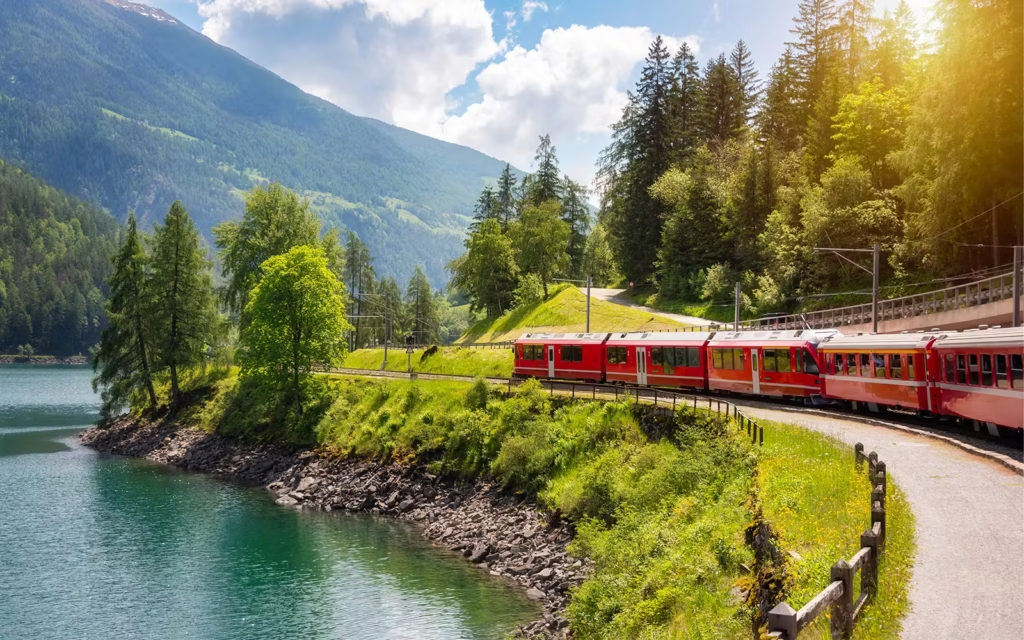
Then you actually do it once.
You walk into a station in the middle of the city, check the departure board, get on the train, put your bag away, and a few hours later step out in another city center. No airport transfer at both ends. No long security line for a normal intercity train. No waiting at baggage claim.
This Europe by train for beginners guide explains the system in plain English for American travelers planning their first rail trip.
Why Train Travel Works So Well in Europe
Rail makes the most sense when the cities you want to visit are connected by frequent, reasonably fast services. Paris to Amsterdam, Rome to Florence, Madrid to Barcelona, and many other city pairs are perfect examples.
The biggest advantage is location. Major stations are often in or near the city center. A two-hour train can therefore beat a one-hour flight once you count airport transportation, early arrival time, security, boarding, and baggage collection.
Trains are also more comfortable for many travelers. You can stand up, walk around, use your phone, watch the scenery, and arrive without feeling like you spent half the day inside an airport.
How European Train Tickets Work
There is no single ticket system for all of Europe. Each country has national or private operators, and international routes may involve more than one company.
In practical terms, you usually buy a ticket for a specific route and date. Some tickets are flexible, while the cheapest fares may be tied to a particular departure and can have strict change or refund rules.
For first-time travelers, the safest habit is to use the official rail operator for the country or a trusted booking platform, then double-check the station names before paying.
Do You Need to Book Trains in Advance?
It depends on the train. High-speed and long-distance services in countries such as France, Italy, and Spain often become more expensive as the departure date approaches. Booking ahead can save a meaningful amount of money.
Regional trains are different. Many local routes have fixed or relatively stable pricing and do not require you to book weeks ahead.
A good rule for a first trip is to reserve the important long-distance journeys once your itinerary is firm, while leaving local day trips more flexible.
Seat Reservations: The Detail That Confuses Beginners
Some train tickets automatically include an assigned seat. Other trains let you sit in any available seat. Rail-pass users may need to purchase a separate reservation on certain high-speed or international trains.
This is why the question ‘Do I have a train ticket?’ is not always the same as ‘Do I have everything required to board this train?’
Read the conditions shown during booking. If a reservation is compulsory, sort it out before travel day instead of discovering the problem on the platform.
First Class vs Second Class
Second class is completely adequate for most travelers. On modern high-speed trains it is normally comfortable, clean, and designed for several hours of travel.
First class can provide wider seats, a quieter environment, more space, or additional services depending on the operator. The value depends on the price difference.
Do not assume first class works like a U.S. airline premium cabin. Sometimes it is a meaningful upgrade; sometimes it is mainly a little more space.
Eurail Pass or Individual Tickets?
A Eurail pass can be useful when you want flexibility, plan many long journeys, or simply value having one rail product across multiple countries. It is not automatically the cheapest option.
Point-to-point tickets can be much cheaper when your itinerary is fixed and you book high-speed trains early. On the other hand, a pass can be easier when you want to change plans without repurchasing expensive last-minute tickets.
The only reliable approach is to price the journeys in your real itinerary, then compare that total with the pass price plus any required reservations.
How to Read a European Departure Board
Departure boards normally show the train number, final destination, departure time, platform, and sometimes intermediate stops. The destination on the board may not be the city where you are getting off because your train continues beyond it.
Match the train number and departure time on your ticket. That is much safer than looking only for your destination.
Platforms can change, and some stations announce them relatively close to departure. Keep an eye on the board rather than wandering too far from it.
How Early Should You Arrive at the Station?
For a normal train journey, you usually do not need airport-style arrival times. For a first trip, arriving 25 to 40 minutes before a major long-distance departure gives you enough time to find the platform, buy water, and handle a little confusion without stress.
Some international services have additional check-in or security procedures, so always check the operator’s instructions for your particular train.
If you are leaving from a huge station such as Paris Gare du Nord, Roma Termini, or Milano Centrale for the first time, give yourself a little extra time.
Luggage on European Trains
One major advantage of train travel is that normal luggage usually stays with you rather than being checked in like an airline bag.
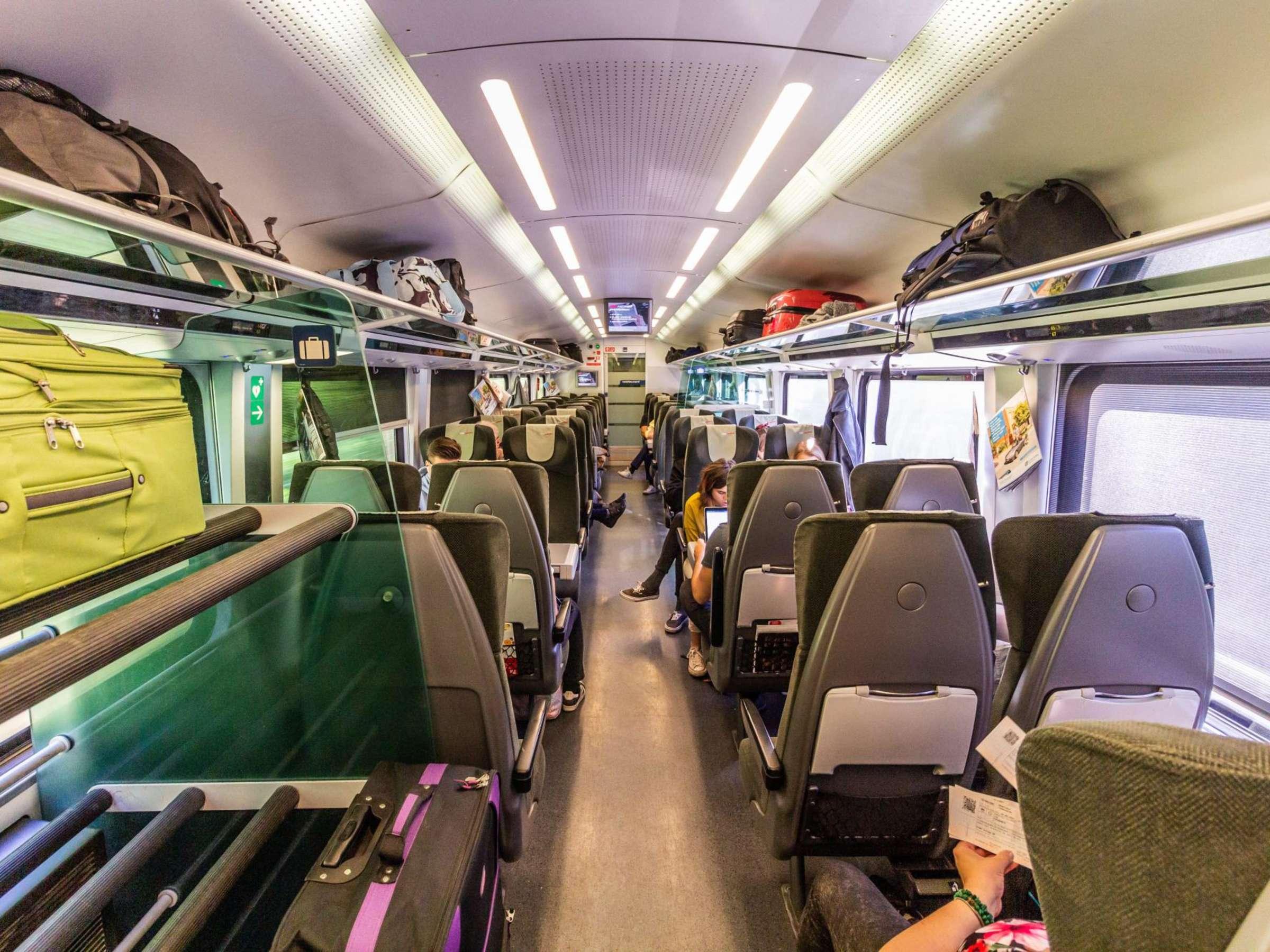
Storage varies by train. You may find overhead racks, spaces between seat backs, and larger luggage areas near the ends of the carriage.
Pack light enough that you can lift and move your own bag. This is especially important if you have a tight connection or arrive at a station with stairs and no obvious elevator.
What Happens When You Change Trains?
A train connection is usually simpler than a flight connection. You get off one train, check the departure board, find the next platform, and board the next service.
However, do not book unrealistic connections just because a website allows them. A ten-minute transfer can be perfectly fine at a small station and stressful at an unfamiliar major hub.
If separate tickets are involved, understand what happens if the first train is delayed. Through-ticket passenger protections and separate-ticket risks can be different.
Night Trains: Useful, but Not Always Cheaper
Night trains are returning on several European routes and can be a memorable way to travel. In theory, you combine transportation with a night of accommodation.
But a private sleeper compartment can cost as much as a hotel plus a daytime train, especially when booked late. Choose a night train because it fits your route and experience, not because you assume it must be the cheapest option.
Common Train Mistakes First-Time Americans Make
The most common mistake is going to the wrong station. Large cities can have several mainline stations, so check the complete station name on your ticket.
Another mistake is assuming every train requires the same boarding process. Some have assigned seats, some do not; some tickets require validation, others are digital and tied to a specific departure.
Travelers also overpack. A suitcase that felt reasonable at the airport can feel enormous when you are carrying it down station stairs with three minutes until your connection.
A Simple First-Time Europe Train Routine
- Buy or download your ticket before leaving the hotel.
- Confirm the exact departure station, date, and train number.
- Arrive with enough time to learn the station layout.
- Check the departure board and watch for platform updates.
- Board the correct carriage if your ticket lists one.
- Store luggage securely and keep valuables with you.
- Keep your ticket and passport accessible if required for inspection.
- Before arrival, check your next station, hotel route, or connection.
Helpful Travel Resources
- 10-Day Europe Itinerary for First-Time Visitors
- Things to Do in Venice, Italy
- Best Places to Visit in Portugal
- Eurail official website
- SBB Swiss rail
- Trenitalia
FAQ: Europe by Train for Beginners
Is train travel in Europe easy for Americans?
Yes. The first journey can feel unfamiliar, but major stations and intercity trains are generally straightforward once you understand train numbers, station names, platforms, and reservations.
Should I buy train tickets before going to Europe?
For expensive high-speed or long-distance services, booking in advance is often smart. Regional trains usually offer more flexibility.
Can I take a large suitcase on European trains?
Usually, but you are responsible for moving and storing it. A smaller suitcase is much easier on stairs, platforms, and crowded trains.
Is Eurail cheaper than buying individual tickets?
Sometimes, but not always. Compare the pass plus reservation costs with the individual tickets for your real itinerary.
How early should I arrive for a European train?
For a first-time traveler, around 25 to 40 minutes before a major long-distance train is comfortable. Some special international services may have additional procedures, so check the operator rules.
Do I need my passport on European trains?
Carry it when traveling internationally and follow the requirements for your route. Identity or border checks can occur, especially on cross-border journeys.
Final Thoughts
Europe by train looks complicated mainly because the system is unfamiliar. Once you understand the basic rhythm – station, departure board, platform, carriage, seat – it becomes one of the easiest and most enjoyable ways to move between European cities. Start with one straightforward route, pack lighter than you think you need to, and give yourself a little extra time at unfamiliar stations. By the second or third journey, you will probably wonder why the system ever looked intimidating.