Europe’s flight network is busy, interconnected, and vulnerable to disruption when weather, staffing, air traffic control limits, or aircraft rotation problems overlap. For travelers monitoring european flight delays cancellations, airline flight disruptions Europe-wide can quickly mean missed connections, long queues, and confusing rebooking options. This guide explains the main patterns behind european flight delays cancellations and what passengers can do when plans change.
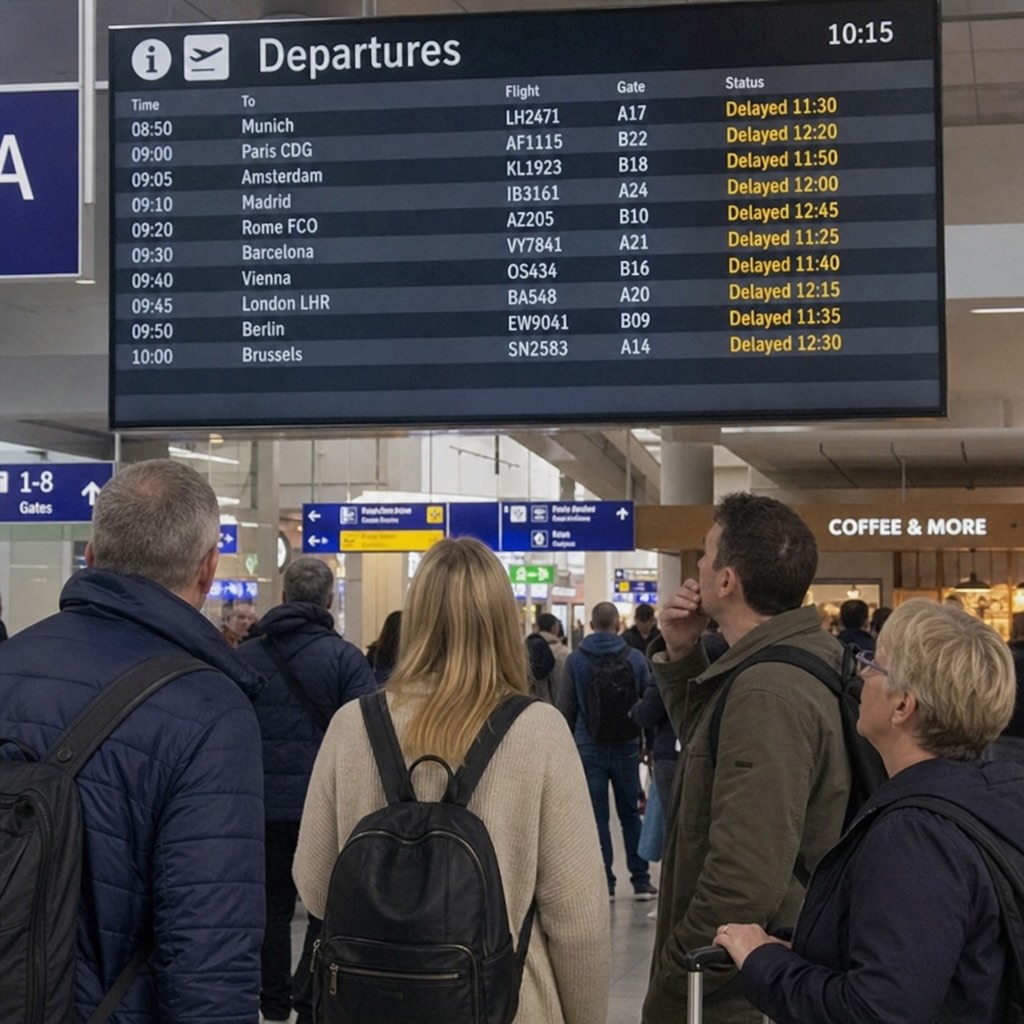
What is causing european flight delays cancellations?
The biggest pattern is that disruptions rarely come from one single issue. Weather can reduce runway capacity, air traffic flow restrictions can slow arrivals, and one late aircraft can delay several later flights because European airline schedules are tightly linked. EUROCONTROL’s summer 2026 briefing described Europe’s network as operating at very high daily flight volumes, with adverse weather still adding air traffic flow delay even as operational procedures helped reduce some pressure. (eurocontrol.int)
Seasonality matters too. Summer brings crowded terminals, thunderstorms, and peak leisure demand, while winter can bring freezing conditions, snow, de-icing delays, and low visibility. When this happens at major hubs such as Amsterdam Schiphol, London Heathrow, Paris Charles de Gaulle, or Athens, the impact can spread quickly to feeder routes and connecting itineraries.
The airports and airlines most exposed to disruption
Large hub airports tend to feel disruption first because they handle high passenger volumes, tight connection banks, and limited spare capacity during peak periods. A delay at a hub is not just one late flight; it can affect inbound aircraft, outbound crews, checked baggage transfers, and passengers connecting across Europe and beyond.
Airlines with dense hub operations may also show more visible disruption simply because they operate more flights through affected airports. British Airways, KLM, Air France, Aegean Airlines, SAS, and similar network carriers can all be exposed when their main operating bases face congestion or weather constraints. Live tracking tools such as FlightAware’s airport delay and cancellation dashboards are useful for checking whether thousands passengers grounded Europe today or thousands passengers stranded Europe headlines reflect your specific route. (flightaware.com)
Solutions: practical steps when your flight is delayed or cancelled
If you are caught in European airline flight issues, move quickly but keep records. The best outcome often goes to passengers who confirm options early, document expenses, and avoid relying on airport announcements alone.
- Check status early: review your airline app, airport website, and a flight tracker before leaving for the airport.
- Choose the best remedy fast: if cancelled, ask for re-routing, a later flight, or a refund before accepting an option.
- Use alternative routing: compare nearby airports and consider rail connections if your trip is time-sensitive.
- Escalate efficiently: try phone/chat/social support and the transfer desk; if lines are long, prioritize channels that timestamp your request.
- Protect your budget: keep receipts for meals, transport, and hotels if the airline cannot provide vouchers.
- Build your claim file: screenshot delay notices, cancellation messages, and boarding pass details.
- Avoid self-cancellation mistakes: do not cancel your own booking too quickly if you still want the airline to rebook you.
Know your passenger rights before you queue
EU air passenger rules generally require airlines to offer reimbursement, re-routing at the earliest opportunity, or re-routing later under comparable conditions after a cancellation. Depending on the circumstances, passengers may also have rights to care such as meals or accommodation, while compensation depends on timing, distance, and whether extraordinary circumstances apply. (europa.eu)
For UK-related journeys, UK261 provides similar protections, including care during qualifying delays and possible compensation when arrival is more than three hours late, unless the disruption was outside the airline’s control. (caa.co.uk)
The takeaway for passengers
European flight delays cancellations are usually the result of network pressure, not isolated bad luck. Watch the hubs, check your flight status often, know your rebooking choices, and keep evidence of costs. A calm, documented approach gives you the best chance of turning disruption into a manageable travel delay rather than a ruined trip.