Top Places to Visit in Lisbon: A Short, Practical Guide
The Top Places to Visit in Lisbon are packed into a surprisingly small area: Manueline monuments by the river, hilltop viewpoints, a tram network that doubles as a sightseeing tour, and one of Europe’s best food scenes. This guide covers what to see, how to get around, and how to fit it all into one, three, or five days.
Before You Go: Timing, Transport and the Lisboa Card
When to visit: March–May and September–October are the sweet spot — warm, sunny, and far less crowded than June–August. Winter is quiet and cheap, with occasional rain.
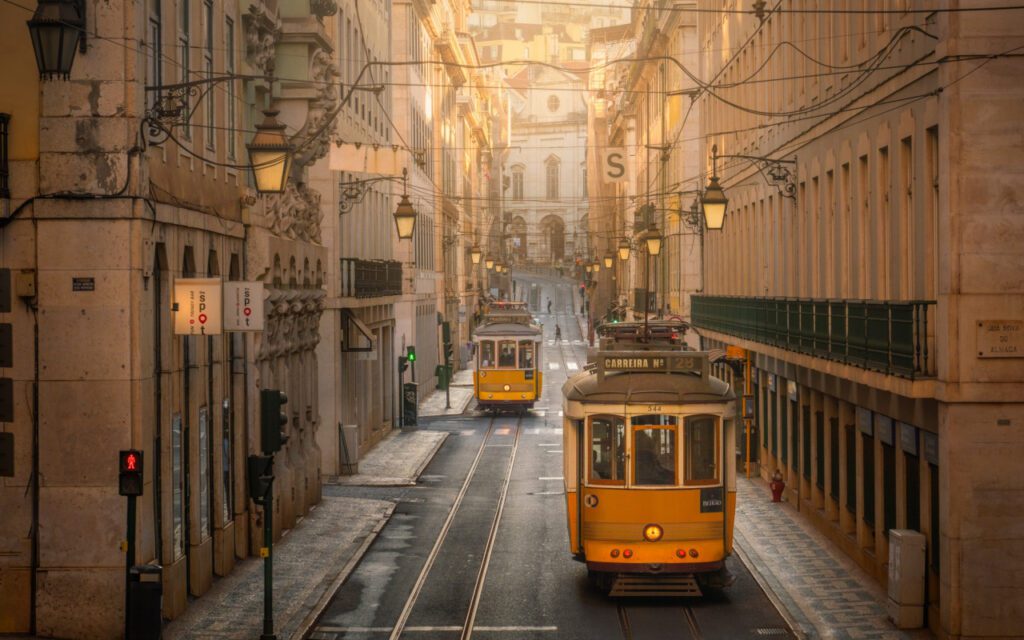
Getting around: Buy a rechargeable Navegante Occasional card (formerly Viva Viagem) at any metro station for a small one-off fee, then load it with either a 24-hour pass or “zapping” pay-as-you-go credit, which is cheaper per ride if you’re not travelling much. The metro is fast and clean, buses fill the gaps, and Tram 28 doubles as a sightseeing route. Uber and Bolt both operate here. Above all: wear proper shoes — the hills and polished cobbles are no joke.
Service note: Lisbon’s historic funiculars and the Santa Justa Lift have faced extended closures following the September 2025 Glória funicular derailment. Check carris.pt for current status before planning a route around them.
Is the Lisboa Card worth it? It covers unlimited public transport (including trains to Sintra and Cascais) plus free or discounted entry to most major museums. It pays for itself if you’re visiting two or three ticketed sites a day. If you’d rather wander neighbourhoods and sit in cafés, skip it. Add up the entry fees for the places you actually want to see and compare.
Iconic Landmarks: The Top Places to Visit in Lisbon
Four monuments carry most of the city’s history between them, and no first visit is complete without at least three of the four.
Belém Tower
Built between 1514 and 1520 as a river fortress, this Manueline landmark is the symbol of Portugal’s Age of Discoveries. Climb the narrow spiral staircase through five floors to the roof terrace for views over the Tagus and the 25 de Abril Bridge, and look for the rhinoceros gargoyle on the western façade — the first depiction of the animal in Western European art. Go right at opening or late afternoon; the staircase creates long queues.
Av. Brasília, Belém. Tuesday–Sunday, roughly 9:30–17:30. Free with the Lisboa Card. Tram 15 to Belém-Jerónimos.
Jerónimos Monastery
A UNESCO World Heritage site and the finest Manueline building in Portugal, commissioned around 1501 to mark Vasco da Gama’s voyage to India. The two-storey cloister is the highlight — every column carved differently with rope coils, sea monsters and coral. The church holds the tombs of Vasco da Gama and the poet Luís de Camões. Book online to skip the ticket queue, and don’t rush the cloister.
Praça do Império, Belém. Tuesday–Sunday, roughly 9:30–17:30. Church entry is usually free; the cloister is ticketed. Free with the Lisboa Card.
São Jorge Castle
On Lisbon’s highest hill, with fortifications layered from Roman through Moorish to Portuguese hands after Afonso Henriques took the city in 1147. Walk the ramparts for a 360-degree panorama over Alfama, Baixa and the river, poke around the archaeological site, and watch for the resident peacocks in the gardens. Allow two to three hours. Bus 737 from Praça da Figueira drops you at the gate and saves a very steep climb.
Rua de Santa Cruz do Castelo. Open daily, later in summer. Ticketed; check current pricing.
Praça do Comércio
Lisbon’s grand riverfront square, rebuilt in Pombaline style after the 1755 earthquake destroyed the royal palace that stood here. Climb the Rua Augusta Arch for the best view down the Baixa grid, sit on the marble steps of Cais das Colunas at the water’s edge, and walk west along Ribeira das Naus at sunset. The arcade restaurants are convenient but pricey — better food is a couple of streets inland.
Free to enter. Metro: Terreiro do Paço. Small fee for the arch viewpoint.
Neighbourhoods: The Best Places to Visit in Lisbon on Foot
Monuments aside, the districts themselves are half the reason to come.
- Alfama — the oldest quarter, a maze of alleys that survived the 1755 earthquake and the birthplace of Fado. Visit the Sé Cathedral, catch the Feira da Ladra flea market on Tuesdays and Saturdays, and remember people actually live here: keep the noise down after dark.
- Baixa — downtown, rebuilt on the world’s first grid plan after the earthquake. Flat, central and full of shops. Rua Augusta, Rossio Square and Praça da Figueira anchor it.
- Chiado — the cultural quarter: Rua Garrett, the Bertrand bookshop (the world’s oldest, from 1732), Café A Brasileira with its Fernando Pessoa statue, and the roofless Gothic ruins of Carmo Convent, left as the earthquake found them.
- Bairro Alto — sleepy by day, one of Europe’s liveliest street-drinking scenes after 10pm. Also home to Igreja de São Roque and the São Pedro de Alcântara viewpoint.
- Pink Street (Cais do Sodré) — a former red-light lane painted pink in 2013, now a compact strip of bars and clubs. Only worth visiting after 11pm.
Museums Worth the Detour
If it rains, or you simply want more than facades, these are the places to visit in Lisbon that reward a couple of unhurried hours.
- Calouste Gulbenkian Museum — one of Europe’s great private collections, spanning 5,000 years from Egyptian artefacts to Rembrandt, Monet and a dazzling room of Lalique jewellery, set in gardens. Check the website before visiting; parts of the site have been under renovation.
- National Azulejo Museum — five centuries of Portuguese tilework inside a 1509 convent, including a 23-metre panel showing Lisbon’s skyline before the earthquake. The convent church alone justifies the trip.
- MAC/CCB (former Berardo Collection) — modern and contemporary art in Belém: Warhol, Picasso, Dalí, Lichtenstein and Paula Rego. Easy to combine with the monastery and tower.
- Fado Museum — a compact, well-designed introduction to Portugal’s UNESCO-listed musical form, in Alfama where it was born. Use the audio guide.
The Best Viewpoints (Miradouros)
Some of the top places to visit in Lisbon cost nothing at all. These four are free, and all of them are worth an hour at golden hour:
- Senhora do Monte (Graça) — the highest and widest view in the city. Best at sunset; arrive early for a spot.
- Portas do Sol (Alfama) — the postcard shot over terracotta rooftops to the river, with cafés on hand.
- Santa Luzia — a few steps away and much quieter, with a bougainvillea pergola and historic tile panels.
- São Pedro de Alcântara (Bairro Alto) — landscaped terraces looking across Baixa to the castle, with kiosks and street musicians.
Five Experiences That Define Lisbon
- Ride Tram 28 — a 1930s tram grinding through Graça, Alfama, Baixa and Estrela. Board at Martim Moniz or Campo Ourique for a seat, go early, and watch your pockets: it’s a known target for thieves. Tram 12 is a shorter, calmer alternative.
- Eat a pastel de nata in Belém — Pastéis de Belém has used its version of the monks’ recipe since 1837. Order more than one, dust with cinnamon, and compare with Manteigaria back in town.
- See live Fado — Alfama and Bairro Alto are the traditional quarters. Book ahead, pick a venue locals rate rather than a coach-tour hall, and stay silent while the singer performs.
- Wander LX Factory — a 19th-century industrial complex in Alcântara turned into shops, street art, restaurants and Livraria Ler Devagar, one of the world’s most photographed bookshops. Sunday brings a market.
- Graze at Time Out Market — dozens of stalls from top Lisbon chefs under one roof at Mercado da Ribeira. Do a full lap before choosing, and avoid 1–3pm and 8–10pm if you want a seat.
How to Fit the Top Places to Visit in Lisbon Into Your Trip
One day: Praça do Comércio and the Rua Augusta Arch first thing, then up into Alfama for the Sé Cathedral and the Portas do Sol and Santa Luzia viewpoints. Lunch in a tasca. Afternoon in Baixa and Chiado, then Tram 15 to Belém for the monastery, the tower and a pastel de nata. Dinner and Fado in Alfama or Bairro Alto.
Three days: Day one as above but slower, adding São Jorge Castle and sunset at Senhora do Monte. Day two entirely in Belém — monastery and tower interiors, the Discoveries Monument, MAC/CCB — then LX Factory in the late afternoon. Day three: Tram 28 early, the Azulejo or Gulbenkian museum, lunch at Time Out Market, Chiado and Bairro Alto in the afternoon, and a sunset boat trip on the Tagus.
Five days: Add a full day in Sintra (Pena Palace, Quinta da Regaleira and the Moorish Castle; about 40 minutes by train from Rossio — book palace tickets in advance). For day five, choose between Parque das Nações and the Oceanarium, a cooking class, or the coastal train to Cascais and Estoril.
Eating and Drinking
Eat at least one meal in a tasca — small, family-run, generous, and cheap, with a daily prato do dia. Beyond that: grilled fish and seafood rice, especially sardines in June; petiscos (Portuguese small plates) for sharing; bacalhau in any of its supposed 365 preparations; and conventual sweets like toucinho do céu and pão de ló. Drink Vinho Verde, a red from the Douro or Alentejo, a shot of ginjinha near Rossio, and a bica espresso standing at the counter.
Two things to know: dinner rarely starts before 8pm, and the bread, olives and butter that arrive unasked (the couvert) are charged for — send them back if you don’t want them.
Practical Tips
- Cards are widely accepted, but carry some cash for small tascas and markets. Tipping 5–10% for good restaurant service is customary, not obligatory.
- Lisbon is safe, but pickpocketing on trams and in crowds is the one real risk.
- Tap water is safe to drink. The sun is stronger than it feels.
- English is widely spoken, but bom dia, por favor and obrigado/obrigada go a long way.
- Where to stay: Baixa and Chiado for convenience, Alfama for atmosphere, Príncipe Real or Graça for a quieter local feel. Avoid the middle of Bairro Alto unless you plan to be out late anyway.
Final Word
Lisbon rewards a light schedule. Book the big-ticket sites in advance, keep a couple of afternoons free, and leave room to follow a street uphill just to see where it goes — that’s usually where the best of the Top Places to Visit in Lisbon turns out to be. For more on the region, see our Portugal travel guides.
Opening hours and admission prices change frequently — always check official websites before you visit.