
Germany is a country of festivals, and its tourism calendar is organized around them more than around weather. Ask a German when to visit and you’ll get a question back: are you coming for Oktoberfest, for Christmas markets, or for the summer?
That’s the useful frame. The best time to visit Germany depends far less on temperature than on which version of the country you want to see — and, relatedly, which of the best cities to visit in Germany you’re building the trip around.
Quick answer
The best time to visit Germany is May through September for warm weather and outdoor life, or late November through December for Christmas markets. May, June, and September are the strongest all-round months: comfortable temperatures, long days, everything open, and fewer crowds than July and August. Late November to 23 December is the single most atmospheric window in the country, though it’s cold and dark.
Germany’s seasons, honestly assessed
Spring (March–May)
March is unreliable and often grey. April improves quickly. May is excellent — the country turns green, beer gardens open, Rhine Valley vineyards leaf out, and prices haven’t hit summer levels. Note that Germany has a cluster of public holidays in May (Labour Day on 1 May, Ascension, Whit Monday) when shops close and Germans travel domestically.
Summer (June–August)
Long days (sunset near 10pm in June), 70s–low 80s°F, and the whole country outdoors. Beer gardens, lake swimming, festivals in every town. Two caveats: many older hotels and apartments lack air conditioning, and heat waves have become more common. August is when Germans take their own holidays — cities empty slightly while the Alps and Baltic coast fill up.
Autumn (September–November)
September is arguably the best month of the year. Warm enough for outdoor dining, wine harvest festivals along the Rhine and Mosel, and Oktoberfest in Munich (which, despite the name, mostly happens in September). October brings excellent color in the Black Forest and Bavarian Alps. November is the country’s dreariest month — grey, wet, with nothing yet open for Christmas until the final week.
Winter (December–February)
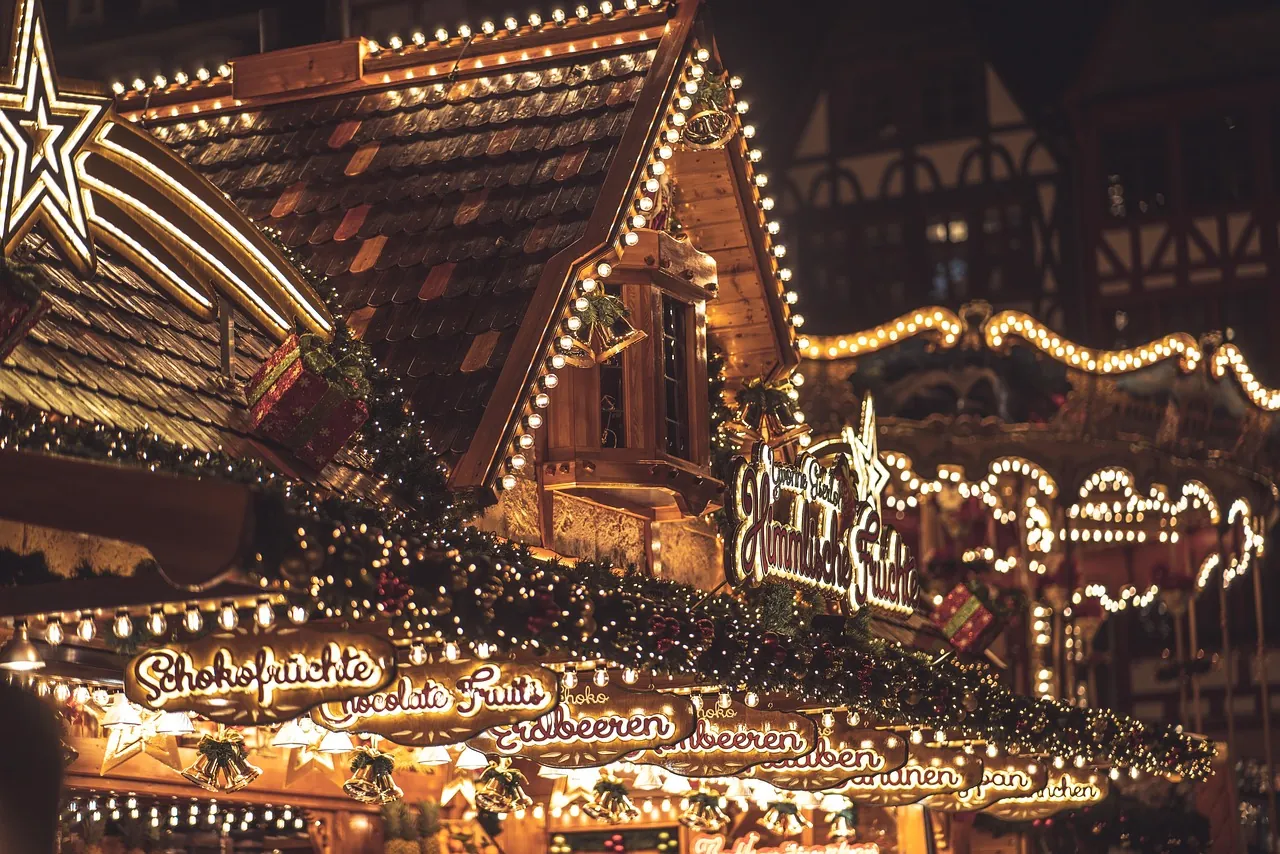
December is transformed by Christmas markets, which typically open in late November and close on 23 or 24 December — a detail that catches out many American visitors who arrive on 27 December expecting them. January and February are cold, dark, and cheap, but they’re the season for Alpine skiing, world-class indoor culture, and Carnival (Karneval/Fasching) in Cologne, Düsseldorf, and Mainz in the run-up to Lent.
Germany month by month
January — Berlin highs around 37°F. Low crowds, low prices, and the winter sales. Good for skiing and museums.
February — About 39°F. Still quiet and cheap, with Carnival season and the Berlinale film festival.
March — Around 48°F. Unpredictable weather, but spring begins and prices stay low.
April — About 57°F. Pleasant, with a crowd and price spike around Easter travel.
May — Around 66°F. Excellent: green, mild, moderately priced, though the run of public holidays closes shops on several days.
June — About 72°F. The longest days of the year and the start of festival season. Crowds and prices climb.
July — Around 75°F. Warmest and busiest month, with peak pricing.
August — About 75°F. The German holiday month — still hot, still expensive, with locals away and tourists everywhere.
September — Around 68°F. The best month overall: Oktoberfest, wine harvest, warm days, and crowds easing off.
October — About 57°F. Strong autumn color and Unity Day on 3 October. Moderate on both crowds and cost.
November — Around 46°F. Dreary and quiet, with Christmas markets only opening in the final week.
December — About 39°F. Christmas markets run through 23 December, drawing high crowds and high prices in the cities.
Forecasts from the Deutscher Wetterdienst, Germany’s national meteorological service, are the most reliable source.
Timing the two big events
Oktoberfest
Munich’s Oktoberfest runs for about 16–18 days, starting on the Saturday after 15 September and ending on the first Sunday in October. Entry to the grounds is free; the difficulty is tent seating, which requires a reservation made months in advance or an early morning arrival on a weekday. Munich hotel rates roughly triple. Confirm the year’s exact dates on the official Oktoberfest site before booking flights.
If you want the atmosphere without the scale, Stuttgart’s Cannstatter Volksfest runs at the same time and is far more manageable.
Christmas markets
Most open on the Monday before the first Advent Sunday — usually the last week of November — and close on 23 December. A few in larger cities run to 30 December, but do not assume it. Nuremberg’s Christkindlesmarkt is the most famous, Dresden’s Striezelmarkt the oldest, and Cologne runs several distinct markets in walking distance of one another. Rothenburg ob der Tauber and Bamberg deliver the storybook version with fewer crowds.
The 10 best cities to visit in Germany
1. Berlin
The essential first stop. No European capital wears its twentieth century more openly — the Berlin Wall Memorial on Bernauer Straße, the Holocaust Memorial, the Topography of Terror, the Stasi Museum. It’s also Europe’s most idiosyncratic nightlife city, with a Museum Island holding five world-class collections and a cost of living far below Paris or London. Best in May–September, when the city lives outdoors.
2. Munich
Bavaria’s capital and the gateway to the Alps. Beer halls and beer gardens, the Residenz, superb art at the three Pinakothek museums, and surfers riding a standing wave in the Englischer Garten. It’s Germany’s most expensive city and its most traditional. Best in September (Oktoberfest) or May–June.
3. Hamburg
A maritime city of canals, red-brick warehouses, and the extraordinary Elbphilharmonie concert hall. More bridges than Venice and Amsterdam combined. The Reeperbahn is famous, but the real appeal is the Speicherstadt warehouse district and a serious restaurant scene. Best May–September; it’s a rainy city.
4. Dresden
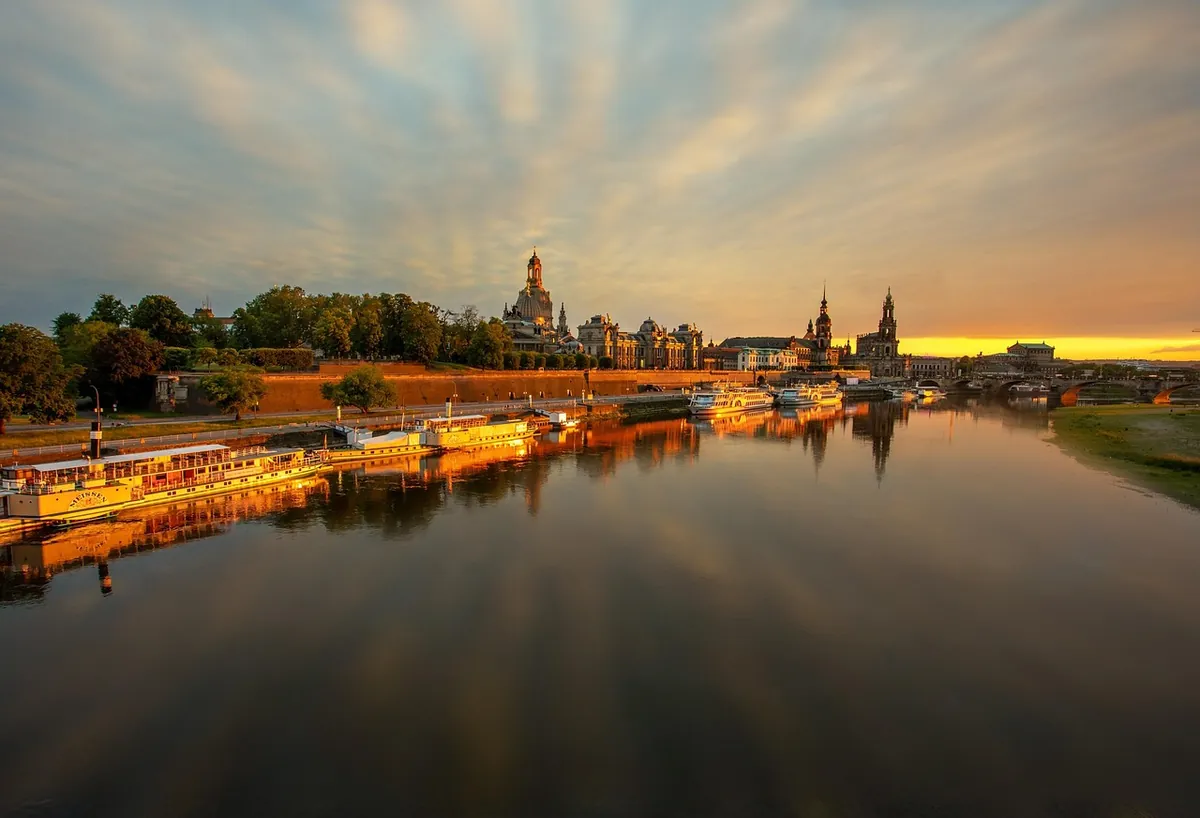
Rebuilt from near-total destruction into one of Europe’s most beautiful baroque skylines. The Frauenkirche, the Zwinger palace, and the Green Vault treasury are the anchors. It also functions as the base for Saxon Switzerland National Park, an hour away, which has some of Germany’s most dramatic hiking.
5. Cologne
Dominated by a Gothic cathedral so large it barely fits in a photograph. Cologne is friendly, walkable, and the heart of German Carnival. Kölsch beer is served in small 200ml glasses and replaced automatically until you put your coaster on top.
6. Heidelberg
The postcard German university town: a ruined castle above the Neckar river, a preserved old town, and the Philosophers’ Walk on the opposite bank. Small enough for a day, pretty enough for two.
7. Nuremberg
Medieval walls, an imperial castle, the Nazi rally grounds and Documentation Centre, and the Palace of Justice where the Nuremberg Trials were held. Layered history in a compact, very walkable city — and the flagship Christmas market.
8. Leipzig
The city where the peaceful revolution of 1989 began, now the most creatively energetic city in eastern Germany. Bach’s church, an enormous arts complex in a converted cotton mill, and prices well below Berlin.
9. Freiburg
The sunniest city in Germany, on the edge of the Black Forest, with a gorgeous minster and small water channels running through the old town streets. The best base for Black Forest hiking and the Alsace border crossing.
10. Rothenburg ob der Tauber
Not a city so much as an intact medieval walled town, and the standout stop on the Romantic Road. It is touristy in summer daylight hours and genuinely magical after the day-trippers leave.
Getting around
Germany’s rail network makes this an easy country to travel without a car. Book on Deutsche Bahn — advance `Sparpreis` fares released around six months out are dramatically cheaper than walk-up prices, and the Deutschland-Ticket monthly pass covers all regional and local transport nationwide for a flat fee, which is remarkable value if you’re staying a few weeks and skipping the high-speed ICE trains.
If you’re driving: much of the Autobahn network has no general speed limit, many city centers have low-emission zones requiring an Umweltplakette windshield sticker, and rental cars are usually manual unless you specify otherwise.
Costs and city tax
Germany is one of western Europe’s better values — meaningfully cheaper than France, the UK, or Scandinavia for accommodation and food. Most German cities levy a city tax (Bettensteuer) of around 5% of the room rate, added at checkout. Cash is still more widely required than Americans expect; carry some, particularly for bakeries, markets, and smaller restaurants.
Entry requirements for US travelers
Germany is in the Schengen Area. Americans can visit for up to 90 days in any 180-day period with a passport only — no visa required.
- The Entry/Exit System (EES) is now operating: expect fingerprint and photo capture at your first Schengen border crossing instead of a passport stamp.
- ETIAS, the €20 travel authorization, is not live yet. The EU pulled its late-2026 launch target in July 2026 and 2027 is now the likely timeline. Nobody can legitimately sell you one today. Check current status at the official EU travel portal.
Frequently asked questions
What is the best month to visit Germany?
September. You get warm days, wine harvest festivals, Oktoberfest, and thinner crowds than midsummer. May is the close second, and December is the best choice if Christmas markets are the reason for the trip.
What is the cheapest time to visit Germany?
January through early March, excluding Carnival week. November is also cheap but weather-wise it’s the least rewarding month.
Is Oktoberfest in September or October?
Mostly September. It begins on the Saturday after 15 September and ends on the first Sunday in October, so roughly two-thirds of it falls in September.
How many days do you need in Germany?
Seven days for two cities plus a day trip — Berlin and Munich is the classic pairing. Ten to fourteen lets you add the Rhine Valley, Bavaria’s castles, or Dresden and Saxony.
Is Germany expensive to visit?
Less than most of western Europe. Expect roughly 20–30% below Paris or London for hotels and restaurants, with excellent public transport and many museums under €15.
Planning the rest of your Europe trip
Germany sits at the center of Europe’s rail network, which makes it easy to combine:
- Alsace and the Rhine flow straight into eastern France — see our guide to the best time to visit France for how the seasons compare.
- Heading south afterward for warmth? Read up on the best cities to visit in Spain, where the shoulder seasons run longer.
- Comparing Christmas market destinations with the UK, our guide to the best places to visit in Scotland covers Edinburgh’s December and Hogmanay.
- For a northern extension, the best time to visit Norway explains the fjord and aurora seasons.


1 thought on “The Best Time to Visit Germany — and the Best Cities to Visit”
Comments are closed.