France runs from the North Sea to the Mediterranean and includes Alpine peaks, Atlantic surf beaches, and lavender plateaus. Averaged together, “France in June” means nothing useful.
This guide is divided into two parts to answer this question. First, the best time to visit France depends on the region and Normandy, Provence and the Alps have best seasons at different times. Second, the best time to visit Paris, France, because the majority of American travelers start their visits in Paris and the city maintains a completely different pace, with a surprising number of businesses closing for an entire month during the summer.
Quick answer
The best time to visit France is May to June or September to early October. Both give you warm weather, long days, everything open, and crowds well below the July August peak. For Paris specifically, the best months are May, June, September, and October, with late September being the single strongest week of the year: warm, uncrowded, and the city fully back at work after the August exodus.
Best time to visit France by region
May to June and September to October in Paris and Île-de-France. Sunshine, lengthened daylight hours and a full cultural program. Avoid the city in August, when many businesses close, or late December–February, when the weather is always grey.
Provence and the Riviera May to June and September. Warm sea, lavender in bloom, and manageable crowds. Avoid August: extreme crowding and peak pricing.
The Loire Valley May to June and September, when the châteaux gardens are at their best and cycling is comfortable. Many châteaux cut their hours in winter.
Normandy and Brittany June through September is the only reliably warm, dry window. November to March is wet and windy.
The French Alps Two distinct seasons: January to March for skiing, July to August for hiking. Avoid May and November entirely, when the lifts are closed and almost nothing is open.
Bordeaux and the southwest May to June and September to October, with the wine harvest in September. August is hot and busy.
Alsace May to June for the wine route, then late November into December for the Christmas markets. January to March is bleak.
Corsica May to June and September, for warm sea without August’s crush. Much of the island closes in winter.
The best time to visit Paris, France
Paris deserves its own answer because its calendar is shaped by things weather doesn’t explain.
The four best months
May: The standard reply and it is a good one. Chestnut trees are in bloom; café terraces open; daylight hours grow to nearly 15 hours a day; high 60s temperatures. Many shops and some museums in France close during their 3 public holidays in May (1 May, 8 May, Ascension).
After all, the longest days of the year are here, warm but not so terribly hot, and on 21 June, the Fête de la Musique makes the whole city a free concert. Very active and operational, but the city is busy.
September: My favorite month of the year. Warm, dry, and with the return of Paris after her summer holiday, it’s la rentrée and all the restaurants, galleries and theatres are open with new menus in place. After the first week significant crowds begin to dissipate.
October: The parks are lovely in the fall, there are fewer people around, and for the first time it’s really low-cost flights!October: The parks are lovely in the fall, fewer people around and the first really cheap flights! More pleasant, cooler and wetter
The months to think twice about
August. This is the one that surprises Americans most. Parisians leave in August, and a substantial number of independent restaurants, bakeries, and small shops close for two to four weeks often with just a handwritten sign on the door. The major museums and monuments stay open and are packed with tourists, but the neighborhood texture that makes Paris rewarding is thinned out. It’s also the hottest month, and most Parisian apartments and older hotels have no air conditioning.
January–February. Grey, damp, and dark by 5pm. On the other hand: the lowest prices of the year, no queues at the Louvre, and the January sales (les soldes) are a genuine event. If your trip is museum-and-restaurant focused, it’s defensible.
Late July. The Tour de France finishes on the Champs-Élysées, which is a spectacle if you want it and a logistical headache if you don’t. Bastille Day on 14 July brings fireworks at the Eiffel Tower and heavy crowds.
Paris at a glance
Winter runs cold and grey: January and February hover around 45–47°F with roughly ten rainy days each, but crowds and prices are at their lowest. March climbs to about 54°F as things start improving, and April reaches 60°F pretty, though Easter brings the first real crowds.
The good stretch begins in May at around 68°F and continues through June at 74°F, both busy but excellent. July and August are the hottest at about 78°F and the driest on paper, with only seven rainy days, but they’re also peak-crowd months, and August carries the closure problem.
Then comes the best window. September settles at about 71°F with moderate crowds — the strongest month of the year overall. October follows at 61°F, still very good. November drops to 52°F and turns grey, though Beaujolais Nouveau arrives mid-month, and December sits near 46°F with Christmas lights and a festive atmosphere pulling crowds back up.
Forecasts from Météo-France, the national weather service, are the reliable source.
Season by season across the country
Spring (March–May)
The Loire Valley gardens, Giverny’s water lilies, and Provence’s almond and cherry blossom all peak here. Mediterranean beaches are still cold. Alpine ski resorts wind down through April. May is the strongest month nationwide.
Summer (June–August)
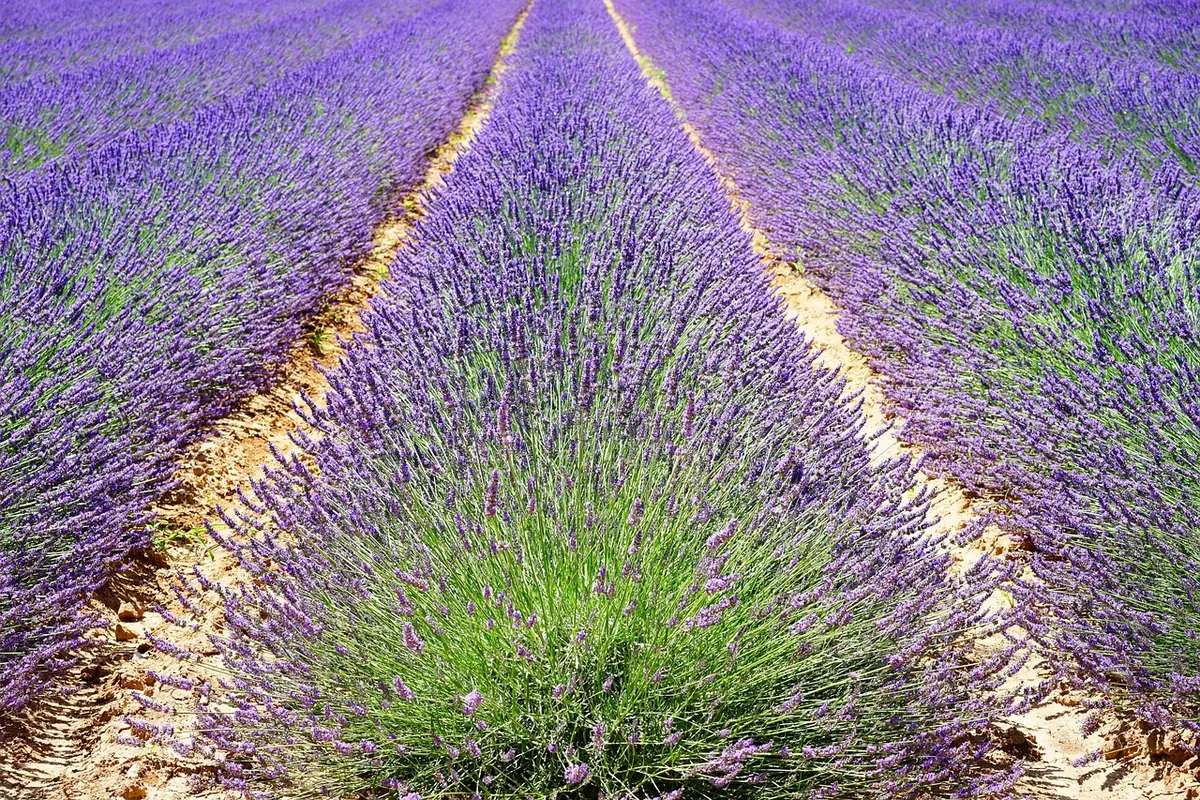
Everything is open and the weather is at its best in the north, but the south is at maximum saturation. Provence’s lavender blooms roughly late June through mid-July around Valensole and Sault; it’s cut by early August, so anyone planning a lavender trip must go in early July at the latest. The Riviera in August is expensive and packed. The Alps, meanwhile, are superb for hiking with lifts running.
Autumn (September–November)
The vendange wine harvest runs September into October in Burgundy, Bordeaux, and Champagne, and many domaines welcome visitors. Weather stays warm in the south into October. November is the country’s quietest, greyest month, though Beaujolais Nouveau on the third Thursday is a fun excuse.
Winter (December–February)
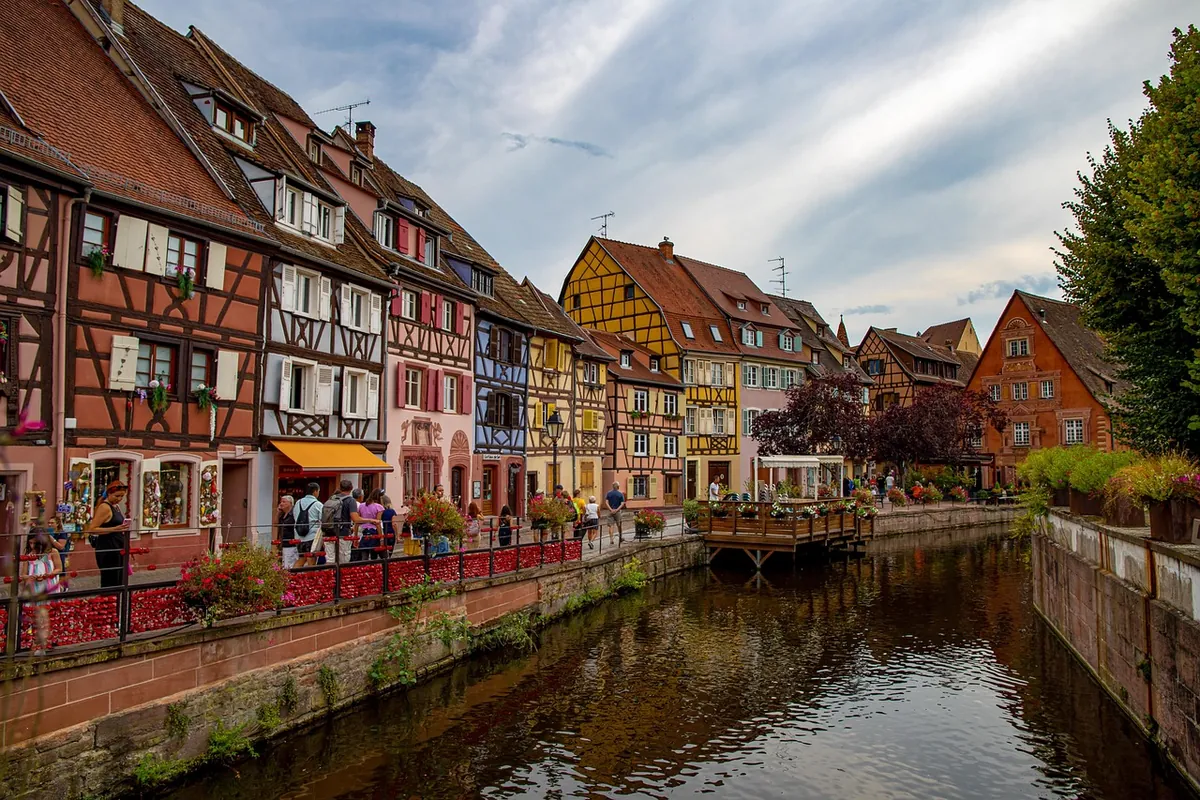
The Alps deliver world-class skiing. Alsace runs some of Europe’s best Christmas markets in Strasbourg, Colmar, and Riquewihr from late November to just before Christmas. Paris is atmospheric under lights. The south and the Atlantic coast largely shut down.
Getting around
France’s TGV high-speed network is excellent and usually beats flying domestically once you count airport time Paris to Marseille is about 3 hours 15 minutes, Paris to Bordeaux about 2 hours. Book through SNCF Connect; fares are released three to four months out and rise steeply as trains fill.
A car is worth it for Provence, the Dordogne, Alsace’s wine route, and Normandy’s D-Day beaches, all of which are poorly served by rail. It is not worth it in or around Paris most major French cities now have low-emission zones (ZFE) requiring a Crit’Air windshield sticker, and enforcement is automated.
Costs and the tourist tax
France is more expensive than Spain or Germany but generally cheaper than the UK or Scandinavia. Paris hotel rates are the outlier.
**Paris raised its tourist tax (taxe de séjour) significantly.** The nightly per-person charge scales with accommodation category, running from roughly €2 at the budget end up to about €16 per person per night for palace-class hotels. It’s added at checkout, not included in the booking rate factor it in.
Ways to reduce costs: the Paris Museum Pass if you’re doing three or more major sites, the formule fixed-price lunch menu (usually far cheaper than the same restaurant at dinner), and carafes of tap water (une carafe d’eau), which are free and standard on request.
Entry requirements for US travelers
France is in the Schengen Area. Americans may visit for up to 90 days in any 180-day period with a passport only no visa needed.
- The Entry/Exit System (EES) is now running at French borders. You’ll have fingerprints and a photo taken on first entry instead of receiving a passport stamp. Build extra time into connections at Charles de Gaulle.
- ETIAS is not yet live. The EU dropped its late-2026 target in July 2026 and 2027 is now the expected timeline. No legitimate ETIAS application is available today; any site charging for one is fraudulent. Check the official EU travel portal for the current position.
For opening hours, festival dates, and regional information, France.fr is the national tourism board.
Frequently asked questions
What is the best time to visit France?
May to June or September to early October. Both windows offer warm weather, full opening hours, and crowds and prices meaningfully below the July–August peak.
What is the best time to visit Paris, France?
September, followed closely by May, June, and October. Late September in particular combines warm weather, thin crowds, and a city fully reopened after the August holidays.
Should I avoid Paris in August?
Not entirely; the monuments and museums stay open, but expect heat, tourist crowds at the major sights, and many independent restaurants and shops closed for their annual holiday. If August is your only option, book a hotel with air conditioning.
When does the lavender bloom in Provence?
Roughly late June through mid-July on the Valensole plateau, and slightly later at higher-altitude Sault. Harvest begins in mid-July, so fields are often cut by the first week of August.
What is the cheapest time to visit France?
January and February, excluding the Alps during ski season. November is also inexpensive, though it’s the greyest month.
How many days do you need in France?
Five days for Paris alone. Ten days lets you pair Paris with one region — Provence, the Loire, or Normandy. Two weeks makes a Paris-plus-two-regions trip comfortable rather than rushed.
Planning the rest of your Europe trip
France borders four of Europe’s other great destinations, and the rail connections are quick:
- The Spanish border is under two hours from Biarritz see the best cities to visit in Spain for how the seasons differ south of the Pyrenees.
- Alsace sits on the German border, and Strasbourg to Frankfurt is under two hours; our guide to the best time to visit Germany covers the Rhine and Christmas market calendar.
- Adding a UK leg via the Eurostar? Read about the best places to visit in Scotland — and note you’ll need a UK ETA.
- For a far-northern contrast, the best time to visit Norway explains fjord and aurora seasons.